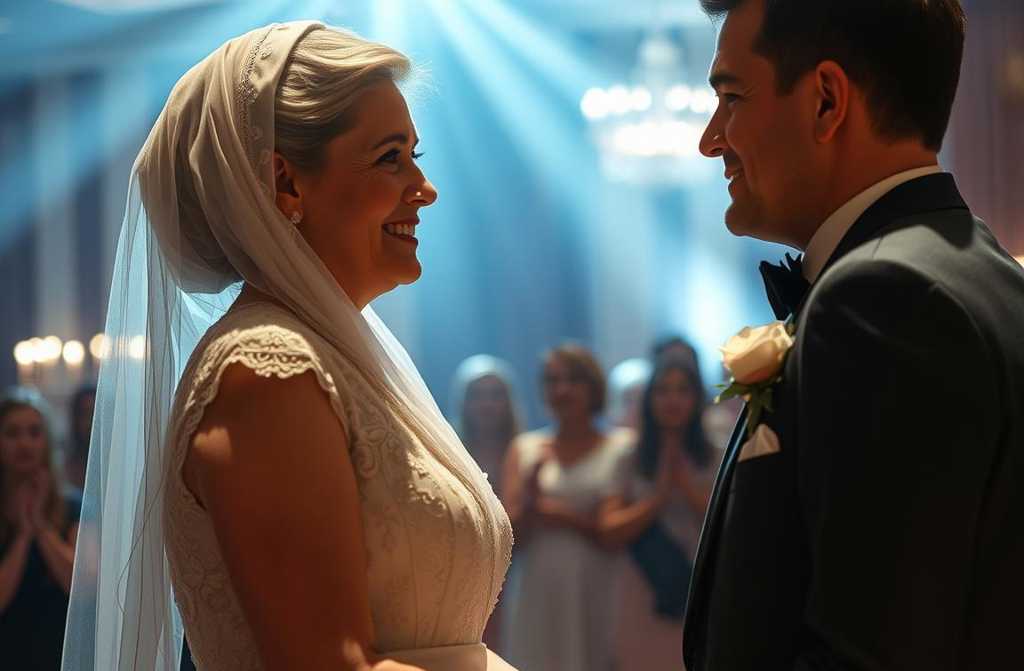
At the wedding the groom turned on his mother, calling her a scoundrel and a beggar, and telling her to leave. Yet she seized the microphone and began to speak
Sarah Thompson lingered in the doorway, barely nudging it open so she wouldnt disturb the ceremony but also wouldnt miss a moment. Her eyes rested on her son with a mix of pride, tenderness and something almost holy. Jack stood in front of a mirror in a crisp suit and a bow tie, his friends helping him adjust the knot.
It looked like a scene from a filmwellgroomed, handsome, composed. Inside Sarah, however, a knot of pain tightened; she felt as though she were a superfluous extra, as if she didnt belong at all.
She smoothed the hem of her worn dress, picturing how it would look with the new jacket shed prepared for the next dayshed decided to attend the wedding even without an invitation. As she took a step forward, Jack, as if sensing her gaze, turned, his expression changing in an instant. He closed the door behind him and stayed inside.
Mom, we need to talk, he said evenly but firmly.
Sarah sat up straight, her heart hammering.
Yes, love. I I bought those shoes, remember the ones I showed you? And also
Mom, he cut in. I dont want you to come tomorrow.
She froze, the words not yet sinking in, as if her mind refused the sting.
Why? her voice trembled. I I
Because its a wedding. There will be guests. You look not quite appropriate. And my job understand, I dont want people thinking I come from a low background.
His words fell like cold rain. Sarah tried to interrupt.
Ive booked a stylist, theyll do my hair, my nails I have a modest dress, but
Dont, he said sharply. Dont make it worse. Youll stand out anyway. Please, just dont come.
He left without waiting for an answer. The room fell silent, the hush wrapping around her like a soft blanket. Even her breathing seemed muffled, the clock ticking in the background.
She sat motionless for a long while. Then, as if driven by an inner force, she rose, fetched an old dustcovered box from the wardrobe, opened it, and pulled out a photo album. It smelled of old paper, glue and forgotten days.
The first page held a yellowed picture: a little girl in a crumpled dress standing beside a woman clutching a bottle. Sarah remembered that dayher mother shouting at the photographer, then at her, then at passersby. A month later she lost parental rights and was placed in a childrens home.
Page after page struck her like blows. A group shot of children in identical uniforms, all solemn, a stern caretaker staring down. That was the moment she first felt unwanted. She was beaten, punished, left without supper, yet never allowed to cry. Only the weak wept, and the weak were never spared.
The next chapter showed her youth. After leaving school she worked as a waitress in a roadside café. Hard work, but no longer terrifying. She began to choose her own clothes, stitching skirts from cheap cloth, curling her hair in the oldfashioned way. At night she practiced walking in heels just to feel pretty.
Then the accident. A clatter in the café, a spilled glass of tomato juice on a customer, shouting from the manager demanding explanations. Everyone was angry until Oliver Hart, tall and calm in a light shirt, smiled and said, Its just juice. Let her finish her shift. Sarah was stunned; no one had ever spoken to her that kindly. Her hands shook as she took the keys to the till.
The following day Oliver left a bouquet on the counter and said, Can I treat you to a coffee? No strings attached. He smiled in a way that made her feel, for the first time in years, less like a café girl from a home and more like a woman.
They sat on a park bench, sipping coffee from disposable cups. He talked about books, travel; she spoke of the orphanage, of dreams, of nights when she imagined a family. When he took her hand, she could not believe it. That touch held more tenderness than she had ever known. From then on she waited for him, and whenever he appeared in that same shirt, she forgot what pain felt like. He never seemed to notice her poverty. Youre beautiful. Just be yourself, he told her, and she believed him.
That summer was unusually warm and long. Sarah later recalled it as the brightest chapter of her lifefilled with love and hope. With Oliver she walked along the River Mersey, trekked through the countryside, lingered for hours in tiny cafés. He introduced her to his friendswelleducated, cheerful folk. At first she felt out of place, but Oliver would slip his hand under the table, giving her strength.
They watched sunsets from the roof of a terraced house, tea in a thermos, wrapped in a blanket. Oliver spoke of a future with a multinational firm but said he didnt want to leave England forever. Sarah listened, holding her breath, memorising every word, because it felt fragile.
One day he asked, halfjoking, halfserious, how she would feel about a wedding. She laughed, turned away, but inside a fire sparkedyes, a thousand times yes. She was just scared to utter it, fearing she might scare away the fairytale.
The fairytale was shattered by others. They were sitting in the very café where Sarah had once worked when a loud laugh erupted at the next table, a slap followed, a cocktail splashed across Sarahs face. The drink ran down her cheeks and dress. Oliver sprang up, but it was too late.
At the adjacent table sat his cousin, voice dripping with disgust: Is this her? Your chosen one? A cleaner? From the orphanage? Is that what you call love? Laughter rippled through the room. Sarah didnt cry; she wiped her face with a napkin and left.
From then on the pressure intensified. Phone calls came with angry whispers, threats: Leave before it gets worse, Well tell everyone who you are, You have a chance to disappear. Rumours spreadshe was a thief, a prostitute, a drug user. An old neighbour, Mr. Davies, confessed that men had offered him money to sign a statement that hed seen her stealing. He refused. Youre good, he said. Theyre scoundrels. Hang in there.
She endured, keeping the secret from Oliver because he was about to go abroad for an internship. She waited for the storm to pass, for them to survive.
Just before his departure, Olivers father, the mayor of Manchester, summoned Sarah to his office. She arrived modestly dressed, sat opposite him as if in a courtroom. He looked at her like dust beneath his boots.
You dont know who youre dealing with, he snarled. My son is the future of this family. You are a stain on his reputation. Leave, or Ill make you leaveforever.
Sarah clenched her hands on her knees. I love him, she whispered. And he loves me.
Love? the mayor scoffed. Love is a luxury for equals. You are not equal.
She left with her head held high, saying nothing to Oliver, believing love would triumph. Yet on the day of his flight he left without ever learning the truth.
A week later the café owner, Stan, called. He accused her of theft, claiming someone saw her taking items from the storeroom. The police arrived, opened an investigation, and Stan pointed the finger at her. Others stayed silent; those who knew the truth were too frightened.
A young, weary public defender presented a weak case. The evidence was flimsy, cameras showed nothing, and the mayors pressure loomed large. The verdict: three years in a standard prison.
When the cell door slammed shut, Sarah realised everythinglove, hope, futurewas now behind bars.
Months later she fell ill. Tests revealed she was pregnant. The father: Oliver.
The first weeks were a blur of pain and silence. She decided to survive for the child. Prison life for a pregnant woman was hellhumiliation, mockerybut she kept quiet, caressing her belly, whispering to the baby at night, thinking of namesJack, Alexander, perhaps after a saint.
The birth was hard, but the baby was healthy. When she first held her son, tears fellquiet, not of despair but of hope.
Two inmates, one convicted of murder, the other of theft, helped her with the newborn, treating the infant with unexpected kindness. They taught her how to swaddle, to feed, to soothe.
After a year and a half she was released on parole. Mr. Davies waited outside with an old baby blanket. Here, he said. They gave it to us. A new life awaits. Little Jack slept in a pram, clutching a plush bear.
Mornings began at six: Jack to nursery, Sarah to a cleaning job, then a carwash shift, evenings at a warehouse. Nights she sat at a sewing machine, turning scraps into napkins, aprons, pillowcases. Day after day blurred, her body ached, but she kept moving like a clock.
On a street corner she ran into Lily, the girl who used to run the kiosk by the café. Lily stared, then asked, Oh God is that you? Alive? Sarah replied calmly, What happened? Lily sighed, Stas went bust, the mayors in London now, Oliver marriedunhappily, they say. Sarah nodded, Thanks, good luck, and walked on, no tears, no hysteria. That night, after putting Jack to bed, she finally allowed herself a silent cry, then rose again at dawn.
Jack grew. Sarah tried to give him everythinga bright jacket, tasty meals, a decent backpack. When he fell ill she stayed by his bedside, whispered fairy tales, applied compresses. When he scraped his knee she rushed from the carwash, covered in suds, berating herself for not watching better. When he asked for a tablet she sold her only gold ringa keepsake.
Mom, why dont you have a phone like everyone else? he asked one day.
Because I have you, Jack, she smiled. Youre my most important call.
He grew confident, charismatic, did well at school, made many friends. He often said, Mom, buy yourself something decent. You cant keep wearing those rags. She answered, Alright, son, Ill try. Inside she wondered if he might become just like everyone else.
When he announced he was getting married, she hugged him, tears glistening. Jack, Im so proud Ill sew you a crisp white shirt, okay? He nodded, as if not hearing.
Then came the conversation that shattered her. Youre a cleaner. Youre a disgrace. Those words cut like knives. She sat long before a photo of baby Jack in blue overalls, smiling, reaching for her hand.
Sweetheart, she whispered, Ive lived for you. Maybe its time I live for me too.
She opened an old tin box where shed saved money for a rainy day, counted the coinsenough for a decent dress, a hairdresser, a manicure. She booked a salon on the outskirts, chose modest makeup, a neat haircut, and bought a simple blue dress that fit perfectly.
On the wedding day she stood before the mirror for ages. Her face no longer bore the exhaustion of the carwash; it held the quiet strength of someone whod survived. She applied lipstick for the first time in years.
Jack, she whispered, today youll see me as I once was, the woman who was loved.
At the registry office, when she entered, heads turned. Women stared, men glanced. She walked slowly, back straight, a faint smile on her lipsno reproach, no fear.
Jack didnt notice her right away. When he finally recognised her, his face went pale. He stepped forward, hissed, I told you not to come!
I didnt come for you, she said calmly. I came for myself, and Ive already seen everything.
She smiled at Dianne, the bride, blushed, then took her seat, watching without interfering. When Jack caught her gaze, she realised he finally saw hernot as a shadow, but as a woman. That meant everything.
The reception was loud, glasses clinking, chandeliers sparkling, but Sarah seemed in another world. She wore her blue dress, hair styled, eyes calm. She didnt seek attention, she simply existed, her quiet dignity louder than any celebration.
Dianne, sincere and warm, approached, You look beautiful, thank you for coming. Sarah replied, Its your day, love. Happiness to you, and patience.
Diannes father, a respectable gentleman, said politely, Please join us, wed be delighted. Jack watched his mother nod with dignity and follow, his protest fading without a word.
Then came the toasts. Guests joked, recalled stories, then fell silent. Sarah stood, microphone in hand as if shed done it a hundred times, and spoke softly:
I wont say much. I just wish you love that holds you when you have no strength left, love that asks nothing about where you come from. Take care of each other, always.
She didnt cry, but her voice trembled. The hall froze, then broke into genuine applause.
She returned to her seat, eyes downcast, when a familiar shadow fell across the tablecloth. She looked upOliver, now greying but with the same eyes.
Sarah is that really you? he asked, breath catching.
You she began.
I dont even know what to say. I thought youd vanished. He mentioned his marriage, I was told you ran off with someone else. I was a fool; my father made me believe.
They stood in the middle of the room as if the rest of the world had vanished. Oliver extended his hand. Shall we talk? He led her down a corridor. She did not tremble; the girl who had been humiliated was gone. She was now simply Sarah.
I gave birth, she said. In prison. To you. I raised him on my own. Olivers eyes widened.
Where is he?
Hes there, in the hall, at the wedding.
Jacks face went ashen.
Jack? Oliver whispered.
Yes, thats our son.
A heavy silence settled, only the echo of her heels on marble and distant music.
I need to see him, talk, Oliver said.
Shes not ready yet. Hell see everything in time. I hold no grudge. Things are different now. She turned back to the reception, Oliver asked for a dance. They waltzed, light as air, while all eyes shifted from Jack to the woman who now walked like a queen.
When the music stopped, Oliver approached, Mom who is this? he asked, bewildered.
Sarah met his gaze, smiled calmly, sadly, proudly. Thats Oliveryour father. Jack stared, words failing.
Youre serious? he asked.
Very serious. Oliver stepped forward, Hello, Jack. Im Oliver.
Silence stretched, only truth hanging in the air.
We three, Sarah said, have a lot to talk about. And they did, not with grand speeches, but quietly, as three people beginning a new chaptertruth, perhaps forgiveness, and a future finally theirs.