13April
Today felt like a small step toward myself. Im Helen, fortyseven, with tired eyes and my brown hair tied in a loose bun. Every weekday since the start of March Ive been leaving the house with my daughter Pippa just before ten, the March air in Birmingham still chilly. Puddles glistened where the last snowdrifts had melted, and a gentle breeze reminded me that spring has yet to find its full voice.
Pippa is twentytwo now, looking like any other young woman but always on edge, ears pricking at every rustle. A few weeks ago her therapist suggested she attend a dayunit for anxiety disorders. I welcomed the idea with both relief and a pinch of dreadthe word unit sounded clinical, almost frightening. As usual, we walked to the bus stop, I slowed at the lights so the traffic noise wouldnt startle her, and we made our way to the clinic.
The staff explained that the dayunit works like an extended therapy session: patients stay from morning until early evening but return home to sleep. I learned that relatives may visit from ninetosix, provided we follow the rulesleave coats in the cloakroom, wear disposable shoe covers, and keep phones on silent. I even switched my phone to vibrate before we entered, lest a sudden ring upset Pippa. She flinches at sharp sounds, so I try to keep everything as calm as possible. The thought of spending the next few hours inside those plain corridors, under the steady white glare of fluorescent lights, set my nerves on edge from the moment we stepped through the door.
The past months have been a juggling act. I work in a small recruitment agency, phoning candidates, processing applications, constantly multitasking. Pippas anxiety crept in slowly; even at university she began skipping lectures, fearing crowds, noticing her heart race before exams. At first I chalked it up to typical student stress, but after a couple of panic attacks we finally sought professional help. It became clear we needed to slow our pace and watch her more closely. Todays planto leave Pippa under observation while I stay nearbyfelt like a new chapter Id been avoiding. Deep down I hoped it would bring her peace, yet I also feared I was finally admitting how often I myself tighten up and suppress worry.
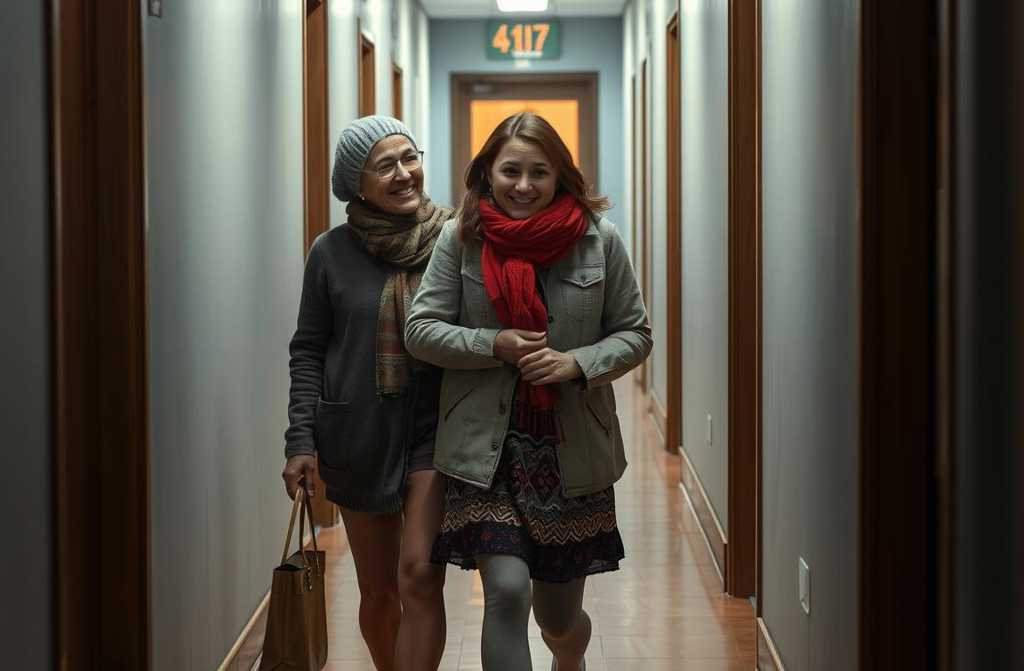
I unfolded my long wool coat in the cloakroom, slipped on the shoe covers, and exhaled. Pippa squeezed my hand before the nurse ushered her to the assessment room. I drifted down the hallway and saw a mixed crowd. Many, like me, were over forty; some looked tense, others more relaxed. In a corner a married couple whisperedlikely there because their son was a patient. Nearby a woman sat with a battered bag on her lap, forcing a smile at each passing doctor. The air was thick with shared anxiety: everyone waiting for a chance to see their loved ones, none wanting to intrude.
I kept my distance at first, my own worries buzzingwhat would the doctors say, could the diagnosis be more complex than anxiety disorder? Then I noticed another mother, about fifty, shorthaired, a single stud in one ear, her eyes tired yet friendly. I sat beside her, gave a small nod, and she replied softly, First time here? She explained shed accompanied her daughter to a different hospital where things felt very procedural, whereas this place seemed more personal. I told her I hoped for results too: Pippas struggling, but the staff said the dayunit offers useful groupspsychological workshops, not just medication. She introduced herself as Lydia and mentioned they had been offered joint counselling for parents. Listening to her, I saw reflections of my own story.
A nurse in a pale uniform approached, saying the clinicians were running behind and that waiting times could stretch to thirty minutes or an hour. I glanced at my watch, remembered I had a brief shift later, but staying with Pippa felt more pressing. The thought of work and phone calls irritated me; I felt guilty for not having everything perfectly scheduled. Lydia sensed my tension and suggested, Shall we pop into the tea room? A cuppa might help. We descended the stairs to a tiny sitting area, dimly lit, and I poured tea for myself. The taste was muted, my mind replaying worries about Pippas appointment. Shes probably in the exam room now, I thought, eyes flicking to my silent phone.
When I returned, the corridor was bustling: patients emerging from consults, some heading to group sessions, others signing paperwork. Pippa rejoined me, looking a little embarrassed, and told me the doctor had asked about the frequency of her panic attacks, prescribed a calming tablet, and invited her to a later group meeting. While she stepped to the washroom, Lydia appeared again, this time with her shorthaired daughter, a shy brunette. Dont worry, youll get used to the schedule, Lydia whispered. Has the doctor told you when the groups start? I sighed, Not yetthey promised to let us know by midday. Im feeling like well be here for a while. From a nearby office I heard a soft sob, the hallway punctuated by murmurs about assessments. It struck me that these walls have witnessed far heavier cases than Pippas, yet my own anxiety began to rise, as if their troubles were echoing my own.
My thoughts drifted back to a conversation from a year ago, when Pippa confessed she sometimes felt she couldnt breathe fully, as if her chest were tightening. I tried to rationalise it as fear, offering logical explanations. Now, standing in this halfsilent hallway, I realised those sensations were familiar to me too. Evening after evening Id catch myself tensing over trivial things: a clients call, a family argument, a minor inconvenience. Id tell myself it was just fatigue, nothing serious. Watching other parents flinch at every sound, waiting for their loved ones to emerge, I recognized the same fear reflected in their eyes as in my own.
By midday many relatives seemed to reach a shaky compromise with their own doubts: some stepped outside for fresh air, others leafed through brochures about therapy programmes. I spotted a poster announcing extra support sessions for families, printed in bold: Anxiety in relatives is as important as in patients. The words sent a strange tingling through my chest. Around me, Lydia waited for her daughter, a couple argued intenselypresumably about their sonwhile the married couple nearby discussed their worries. It seemed we were all here to help someone else, yet perhaps we each needed help too.
A doctor on duty passed, giving me a warm smile and asking if everything was alright. I nodded mechanically, though a wave of anxiety rose to my throat. I had been so consumed by Pippas worries that I hadnt noticed how tightly Id been gripping my shoulders all day. That moment felt decisive: continue pretending I had everything under control, or admit I too needed support. Deep down, I chose the latter.
Taking a steady breath, I glanced at the clock at the far end of the corridorPippas session was about to end, and the clinicians would soon invite us for a brief debrief. I felt a sharp clarity: there was no turning back. I had to stand by my daughter, but also face myself honestly. I didnt know how to voice it aloud yet, but I sensed the next minute of my life would be different. I clenched my fists, rose from the chair, and felt I had made a pivotal choice. Nothing would be the same.
Later, Pippa emerged from the doctors office, shoulders slumped, the lateafternoon light filtering through the windows. She told me the doctor had prescribed medication for the coming weeks and would monitor her progress. He had invited us both to a joint followup, but asked us to wait a while longer. I managed a brief smile; I could see the tremor in her voice, the fatigue from a long session. Relief washed over meshe was finally receiving helpbut I also sensed the need for both of us to summon more patience and strength. I knew I, too, had to speak up about my own anxieties.
Lydia, who had become a quiet friend over the day, sat down beside me. Her daughter was perusing a pamphlet about group activities. I asked how their assessment was going. Lydias reply was dreamy, thoughts scattered yet sincere: I think well need several sessions. The programme is comprehensiveexercises, talks, specialist meetings. She turned to Pippa, her face softening. You know, Helen, I feel our kids expect us to steer them confidently through life, yet we sometimes struggle just to keep our footing. I nodded, feeling a warm knot rise in my throat. It mirrored my own experience: focusing solely on Pippas anxiety had left me detached from my own feelings.
Patients drifted from one room to another, parents trying not to interfere. Some whispered to the attending nurse, others thumped a book on their laps, all glancing at the clocksessions could run until six. My back ached from prolonged sitting, so I suggested a short walk. Pippa agreed, seeming slightly calmer now that the medication might ease her heightened anxiety. As we strolled past the information stand and a table of disposable cups, she asked softly, Mum, do you ever feel that way? The fears? I hadnt expected the question; Id dismissed my work stress as ordinary. Sometimes, I admitted, feeling a shiver run down my shoulders, yet also a lightness of being heard.
A nurse then announced that a familytherapy room was available for a brief discussion. You can join the miniconsultation to plan the next steps, she said, gesturing us in. I instinctively checked for a ringing phone, but it lay silent in the deep pocket of my skirt. Inside the modest room sat a doctor in his late forties, kindeyed. He listened to Pippas short report, then turned to me.
How are you? he asked, voice barely above a whisper. The question startled me. I thought of the trembling hands, sweaty palms, sleepless nights haunted by vague worries. I exhaled and answered that it wasnt easy. I thought the focus was on Pippas therapy, but perhaps I need to sort out my own anxiety as well.
He nodded, explaining that the centre also offers group sessions for relatives dealing with emotional burnout and fear. If you wish, we can schedule you for a psychologists consultation, he offered calmly. Many parents find it helpful. I glanced at Pippa, saw a spark of understanding in her eyes: you can try it too, Mum. My heart swelled with gratitude. In that instant I realised Pippa didnt see me as an ironclad figure; she simply needed her mother nearby, not flawless.
We left the room, and Lydia stood nearby, waving when she saw us. Her daughter had changed shoes and was ready to go. Lydia asked, Everything alright? I managed a weary smile, Yes I think Ill sign up for the relatives groups too. Its time to look after myself as well as my child. Lydia nodded, The psychologist told me that if were exhausted and suppressed, we cant truly support others. She asked for my number to remind me about the sessions. I gave it.
I buttoned my coat, checked that Pippa didnt need anything else, and waited while she slipped on her boots. The dayunit would close in about an hour, and staff were preparing tomorrows lists. Lydia and her daughter said goodbye, promising to meet again at a breathingtechnique workshop. I watched them go, feeling a strange blend of bewilderment and joy: strangers had become allies, sharing the weight of parental worry.
Outside, the wind was brisk, the sky a dull grey, streetlights flickering on one by one. A woman on a bench waited with a few others, all looking a bit like my own reflectioneyes wary, shoulders braced against the cold, determined to stay strong for someone else. Yet inside, I no longer felt alone. Hours ago Id feared speaking of my own problems, seeing it as a sign of weakness. Now I understood the opposite: the deeper the anxiety, the more we must let it be seen.
We walked slowly to the bus stop, careful not to startle Pippa with the rumble of traffic. As the bus appeared in the distance, she turned to me and asked quietly, Do you regret agreeing to these appointments? I placed my hand on her shoulder. No, I said. If we want to climb out of this, we both have to work at it. She nodded and gave me a gentle hug. A wave of realization washed over me: Im not only needed by my daughter, I also have a right to be cared for.
When the bus finally opened its doors, I helped Pippa aboard. The interior was cramped but we managed to sit side by side. I tried to recall how many fortnightly therapy sessions the programme usually required, deciding Id find out tomorrow. The crucial thing was that I had finally made a decision: I would no longer neglect my own wellbeing. Pippa rested her head against the window; I felt a dull ache in my back, straightened my shoulders, and looked out at the dim city beyond the glass. The streetlights cast a faint promise of change.
The journey home felt like the start of a new chapter. It wont be easy nor quick, but weve taken the first step onto a path where both mother and daughter are allowed to seek support. I smiled to myself, thinking of tomorrows possibilities, and felt a quiet confidence that, at last, Im looking after both of us.