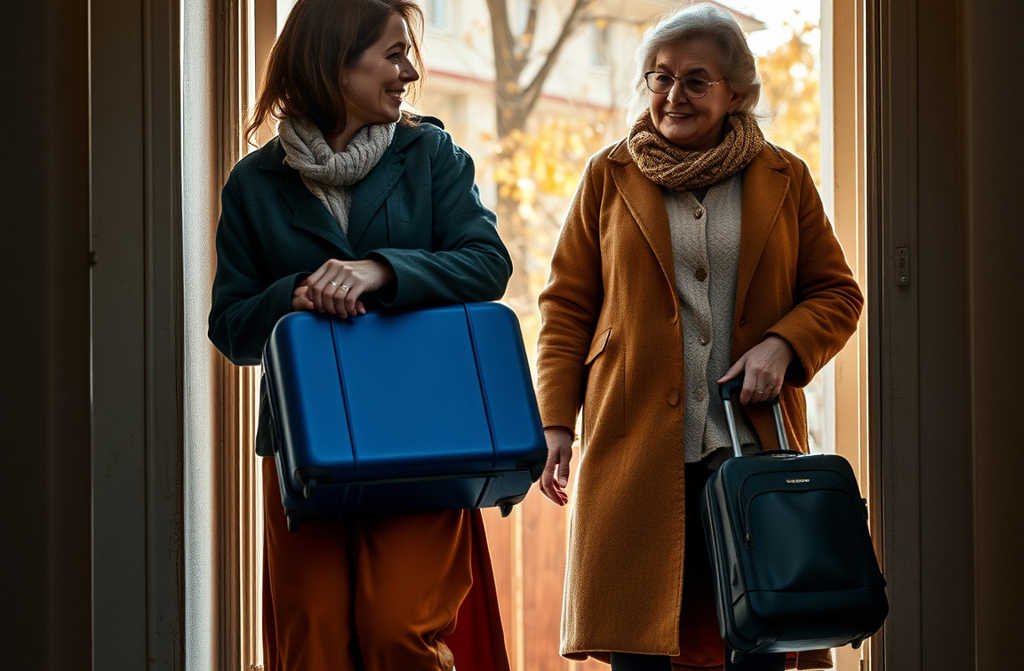
My things are already packed, Margaret Whitaker declared, sliding a battered suitcase to the foot of the hallway.
What do you think youre doing? Laura snapped, fighting the urge to raise her voice even higher. This is my home too, you know!
Your home? Margaret chuckled, wiping her hands on the apron. Ian is my son; the flat is in his name, so youd best mind your manners.
Ive lived here eight years! Eight! And you have no right
I do have a right, dear, Margaret replied, her tone as sharp as a kitchen knife. Take that pot off the table; Ive got dinner to make. Dont act as if Im a guest in your kitchen when Im the one who runs the house.
Laura snatched the pot so abruptly that the beet soup nearly spilled. Her hands trembled, her temples throbbed. Margaret had arrived only three days ago, yet the flat felt turned upsidedown, at least from Margarets point of view.
Mrs. Whitaker, I understand youre worried about your son, but
Im not worried. I know what Im doing. You, love, think only of yourself. Ian is in hospital and youre busy boiling borscht.
I visit him every day! Laura exploded. Hes under treatment and cant have visitors right now.
Ah, treatment. And you sit at home, cooking up a storm. No one expects a wife to be with her husband every minute, but youre making a habit of it.
Laura set the pot back down, exhaled slowly, counted to ten as a psychologist once taught her. One, two, three It never reached ten.
Do you know what Ill do? she whispered. Ill go for a walk.
She grabbed her coat, slipped her boots onlaces still untiedand darted out. On the pavement she pressed her forehead to the cold wall of the stairwell, breathing deep, counting each inhale and exhale. Inside her, a tiny volcano rumbled.
Ian had been admitted a week earlier with a burst appendix. A routine operation, but complications left him convalescing. Laura had been a nervous wreck, sleeping little, shuttling between work and the hospital. Then Margaret arrived like a gale, fresh from a tiny market town in Yorkshire, took over the guestroom, and sent Laura to the sofa in the sittingroom. And so began the siege.
Laura trudged down the creaking stairs, out into the autumn wind that teased her hair and lifted the hem of her coat. She settled on a bench by the entrance, lit a cigarette, and took a long drag.
Laura, why are you so pale? called out her neighbour, Helen Parker, walking by with a bag of groceries. Your motherinlaw is here, I heard. Is she helping?
Laura forced a smile. Shes helping, all right.
Helen shook her head, sitting beside her. At sixtyfour, shed raised three children on her own, now living alone. Her eyes were kind, her voice soft.
You know, motherinlaw types come in all shapes. My own, before she passed, liked to boss people around. I learned early that it was her way of showing lovemisguided, heavyhanded, but thats all she knew.
Mrs. Whitaker only cares about her son. She tolerates me.
Maybe shes scared of losing control. Ian is her only child, shes seventythree, and shes fearing shell be useless now that hes ill, Helen guessed. She hides it behind a stern front.
Laura stubbed out her cigarette, the ash falling into a nearby bin.
Its impossible to live with her, she muttered. Shell drive me mad.
Youll get through this, Helen assured. Ian will be discharged, and shell go back.
If she goes back.
Helen patted Lauras shoulder and walked on, leaving Laura to replay the first days of her meeting with Ian. He had walked into the office where she worked, papers flying, and helped her gather the scattered documents. Tall, handsome, a dimple in his chin, he invited her to a café. He courted the oldfashioned wayflowers, complimentssomething Laura, at thirtytwo and still single, welcomed. He spoke little of his family, just that his mother lived far away in a small town and he saw her a couple of times a year. His father had long since passed.
The wedding had been modest. Margaret, slight and greyhaired, inspected Laura as one might a market stall, every comment edged with a barb.
Nice dress, but a touch too bright.
Hold the bouquet properly, it looks like a broom.
Are you sure youre ready for marriage? Isnt it a bit early?
Ian would smile it off, saying his mother was only worried. Laura endured, smiling, swallowing each insult.
After the ceremony Margaret left, but she called daily, offering advice, opinions, endless chatter. She soon started staying over for weeks, rearranging furniture, cooking only what Ian liked, ignoring Lauras efforts. Shed criticize Lauras cleaning, her attire, even her hair.
Ian, dear, have you thought about washing those curtains? Id have done it ages ago.
Laura, darling, perhaps a new haircut? This one is rather dated.
Again with the pasta? Ian, you dont even like pasta! Ill make you some mince now.
Ian would retreat to another room, leaving Laura to fend for herself.
Years passedeight long yearswithout children. Doctors shrugged, blaming stress and age. Margaret hinted that Laura was to blame for Ians lingering health. Ian stayed silent, Laura wept into pillows at night, hoping the walls wouldnt hear.
Eventually Margarets visits grew less frequent, and Laura learned to ignore the jabs. They lived, not happily, but no longer in outright misery.
Then Ian fell ill again. Within three hours of the phone call, Margaret arrived, suitcase in hand, pots clanking, determined.
Im staying for good now. Ian cant be left alone.
Laura rose from the bench, brushed the coat from her shoulders. She had to go back, for the sake of the flat, for the sake of the life shed built, even if Margaret ran the kitchen.
She climbed the stairs, opened the hallway door. A familiar blue suitcase sat where shed left it, its corners worn.
Margaret stepped out of the bedroom, hands still drying.
Your things are already packed, she said, nodding toward the suitcase. You can take them.
Laura froze, a rush of sound filling her ears.
What?
You understood me perfectly. Ian needs peace, not your outbursts. He called me, said youre always on edge. While hes ill, its best you live elsewhere.
Ian said that? Laura gasped, her breath shallow. Thats not true.
Its true, dear. He asked me to send you awaynot forever, just until hes better. Find a friends place.
Laura moved toward the suitcase, sat beside it, and opened it. Inside lay her dresses, sweaters, underwear, all jumbled.
You have no right, she whispered.
I do. Im Ians mother, and I know what he needs.
Laura lifted her head, meeting Margarets stonecold stare.
You called Ian? Margaret said. Ill call him myself now.
Please do, Laura replied, her voice trembling. She fumbled for her phone, dialed the number, and waited as the line rang. Ians sleepy, weak voice finally answered.
Ian?
Laura mother says you asked her to send me away. Is that true?
A heavy silence fell.
I mother thinks its best. Were not getting along, and I cant be nervous right now.
So you agree? You want me to leave?
I want us not to fight. Stay somewhere for a few weeks, mother will leave, and you can come back.
And if she doesnt leave?
She will. Please, Laura, dont make a scene. Im really not well.
Laura hung up, sank to the floor of the entrance, her back against the wall. Margaret stood above her, a triumphal smile on her lips.
Now, take your suitcase and go, she said.
Laura closed her eyes. Inside, a rope that had been pulled tight for years finally snapped. Pain surged, but it was a distant, muted ache, accompanied by a strange relief.
Alright, she whispered. Ill leave.
She lifted the heavy suitcaseMargaret had stuffed it full of anything she could findslung her coat over her shoulders, and paused at the doorway.
Just so you know, Margaret Whitaker, Im not coming back.
How can you not? Ian
Ian can stay with you. If youre more important to him than I am, if he cant stand up for me even now, then Ive endured your barbs long enough. Ive learned, standing on this stairwell, that I no longer need to endure.
Margarets face went ashen.
What are you saying? Ian wont let you go!
Well see.
Laura stepped out, closed the door, and descended the stairs, dragging the suitcase behind her. On the street she pulled out her phone and dialed a friend, Sophie.
Sophie, can I come over? Ive got my things with me. Ill explain later.
She hailed a black cab, told the driver the address of Sophies flat in Leeds. The radio played a soft pop tune as the city lights flickered past. Laura watched houses and trees roll by, thoughts of Ian drifting like smoke.
Ianher husbandquiet, reliable, but their love had become something forced, a habit born of duty rather than desire. He never defended her when his mother snarled, withdrew when she was low, and left decisions to her. She had endured because she felt she must, because she was married, because age made her think there was no other path. She had been afraid.
The cab stopped outside Sophie’s thirdfloor flat. Laura paid, climbed the stairs, and Sophie opened the door in a bathrobe, coffee steaming on the kitchen table.
Laura, whats happened? Sophie asked.
Can I stay here for a while? Just until I find somewhere of my own.
Of course, come in, tell me everything.
They talked until deep into the night, Lauras tears mixing with nervous laughter, Sophies comforting nods, tea refilled.
Laura, I always thought you were too good for Ian, Sophie said.
Dont be silly.
Seriously. Youre clever, beautiful, hardworking. Hes more of a pushover. His mother has taken him over.
Hes taken over.
Now youre free. Divorce, start anew.
Laura nodded. Divorce felt right, though it still loomed heavy.
A week later Ian was discharged, calling her, begging her to return, promising everything would be fine, that his mother had left. Laura listened in silence.
Laura, why are you so quiet? Come back, we can talk.
Ian, do you understand whats happened?
My mother overreacted, but she was only worried.
And who worried about me? You?
I Laura, stop this again.
Im not beginning again. Im ending it. Im filing for divorce.
What? Youre mad! Over a single fight?
No, over eight years.
She hung up. Ian kept calling for days, then stopped.
Laura found a modest flat on the outskirts of Leeds, moved her things in, settled, returned to work, walked in the park, read, lived. For the first time in years she felt truly alive.
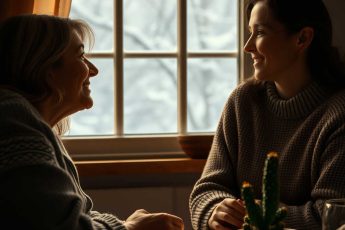
A month later Margaret called, asking to meet. Curiosity won, and they met in a café. Margaret, older, stooped, ordered tea.
Laura, I wanted to talk.
Im listening.
Ian has shut himself away, isnt eating, says youve cut him off.
Ive filed for divorce.
But why? Couldnt you forgive?
Ive spent eight years being humiliated. Ian stayed silent. You forced me out of my home, packed my suitcase as if I were a servant, and he went along. Do you think Ill ever forgive that?
Margaret lowered her eyes.
Ive spent my life fearing Ian would leave. My own husband left when our son was three, called me dull and suffocating. I was alone, raised Ian as best I could, doted on him, terrified hed go. Then you appeared, and I thought youd take him from me.
I didnt take him. I just wanted to be his wife.
I know. I couldnt accept it. Im sorry.
Laura sighed, looking at Margarets frail back, the wrinkled hands gripping the teacup.
I forgive you, Margaret, but it changes nothing. I wont return to Ian.
What if he changes?
He wont. Hes comfortable with his mother nearby and a wife who tolerates the situation.
Margaret stood.
Then goodbye, Laura.
Goodbye.
Laura finished her tea, left the café, walked down the high street, watching shop windows and people. Inside, a calm settled, as if a heavy load had finally been set down.
The divorce went smoothly; Ian didnt contest, they split no assets, and Laura walked away with nothing but the memory of that suitcase at the doora sign that it was time to go.
A year later she changed jobs, found a better one, and met Stephen, a gentleman who respected her space and opinion. With him life felt easy.
Sophie, ever regret the divorce? Stephen asked one afternoon.
No, never, Laura replied. That suitcase by the door was a signal. It told me it was time to leave, that I no longer had to endure.
What about the eight years?
Just experience. I learned what I dont want, and thats vital.
She smiled, looking out at the autumn town, leaves swirling and settling on the pavement like a golden carpet. Winter would come, then spring, the world turning anew.
Sometimes you must walk away to discover yourself. Sometimes loss is the path to gain. That suitcase at the threshold wasnt an endingit was a beginning.