The Return to Life
Karen had not set foot in her sons flat for months. She didnt want to. She couldnt. The tears had long since dried up. Grief had settled into a dull, relentless ache, a sense of hopelessness that weighed her down like a stone.
Stephen was twentyeight, never one to complain about his health. Hed finished university, held a steady job, kept to the gym, and was dating a girl. Two months ago he went to bed and never woke up.
Karens marriage had collapsed when Stephen was six and she was thirty, the usual storyher husbands infidelities, repeated and brazen. He vanished, shirked child support, and left the boy to grow up without a father. Karens parents stepped in. Suitors came and went, but she never found the courage to marry again.
She worked hard and earned a living. At first she rented a small counter in a Tesco to run a modest opticians shop. Karen was an ophthalmologist, after all. Then she took out a loan, bought a premises, and turned it into a respectable Vision Centre, complete with her own consulting room. She gave eye exams, fitted glasses, built a reputation.
Last year the family bought Stephens onebed flat on the same block where Karen lived. They did a modest refurbishment. A roof over their headsthat was enough.
Dust lay thick everywhere. Karen grabbed a rag, started wiping the floor, shuffled the sofa, and a phone slipped out from beneath it. She fumbled for it, finally plugging it into the charger.
Later, back home, tears welling, she scrolled through the images on Stephens phone: him at work, laughing with friends on holiday, smiling beside his girlfriend. She opened Viber and, at the top of the chat list, saw a message from an old university mate, Dennis. The attached photo showed a young woman she didnt recognize, cradling a boy. The child was a spitting image of her little Stephen.
Remember that New Years Eve at Lenas place back when we were still at university? Lenas friend was there. She lives opposite us now, with a kid. The little one looks just like yours. Snap a pic for memorys sake, the text read, sent a week before the tragedy. So Stephen had known and never told Karen. That was the cruel twist of fate.
Karen knew where Dennis lived. The next day, after work, she drove to his house. The boy ran up to her on a bicycle, begging for a turn.
Dont you have a bike? she asked, bending down.
He shook his head.
A woman in her early twenties approached, heavy makeup masking her features.
Who are you? she demanded.
I think Im his grandmother, Karen replied, surprising herself.
And Im Harriet, his mother, the woman said, extending a hand. Nice to meet you.
Karen took them to a nearby café. Harriet ordered an icecream for Tommy, the boy, and a coffee for herself. Over the sugarlaced treat, Harriet began her story. Six years ago shed left a quiet Norfolk village at seventeen, enrolled in a tailoring college in Birmingham. During the New Year break, her friend Lena invited her to stay. Lenas parents were away visiting relatives, and Lenas boyfriend Dennis was coming over to celebrate with her brother Stephen. That night, Harriet and Stephen slipped away together. Stephen left his phone, promising to call, but never did.
When Harriet discovered she was pregnant, she tried to reach Stephen. He answered with fury, telling her that respectable women should handle contraception themselves, handing her money for an abortion and demanding she disappear from his life. He never saw her again.
Harriet never finished her course. She was forced out of her student house with the baby in tow. Returning to the village was impossible; her mother had died, her father and brother were heavy drinkers. She now rented a tiny room from an elderly widow, caring for her child while working long shifts at a private dumpling shop, barely making ends meet. The rent took most of her wages, and a place in a proper nursery was out of reach.
The following day Karen moved Harriet and little Tommy into Stephens flat. A new chapter began for her.
Tommy was placed in a respectable private nursery. Karens days filled with errandsbuying clothes for Harriet and the boy, spending hours with Tommy, who mirrored Stephen in every way: the same eyes, the same stubborn set of shoulders.
Karen took Harriet under her wing, teaching her how to apply makeup properly, how to dress, how to look after herself, how to cook, how to keep a tidy home. In short, she became a mentor, a surrogate mother.
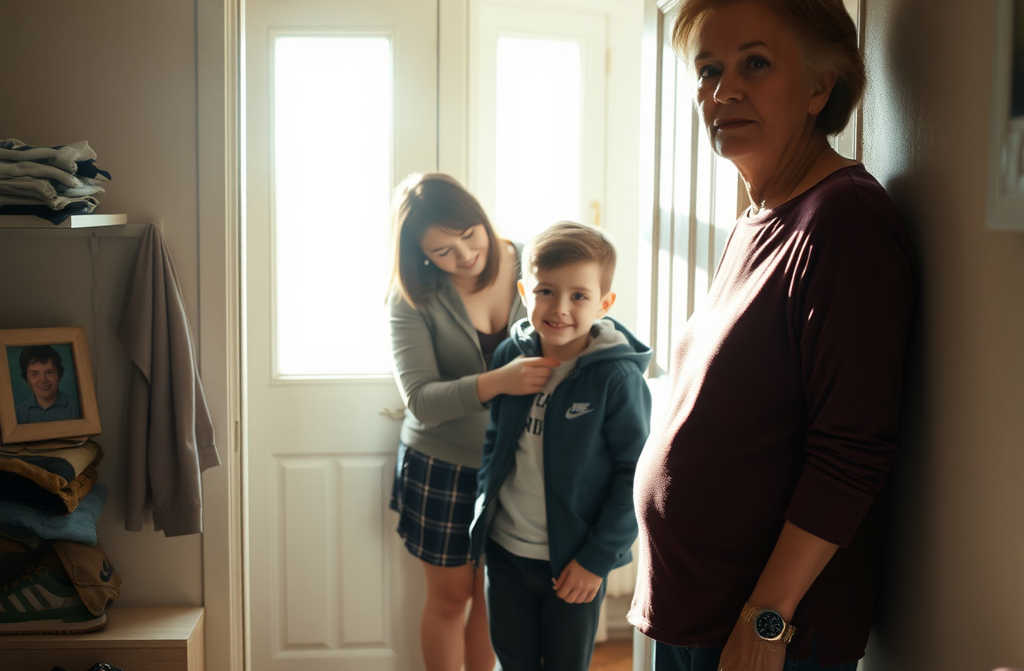
One evening, they sat together watching television. Tommy clutched Karens arm, his head resting against her shoulder, and whispered, Youre my favourite, Grandmum. In that instant, Karen felt the hollow that had haunted her for years dissolve. Grief no longer pressed down on her like a lead weight. She realized she had slipped back into a life that allowed joy, all because of this tiny human, her grandson.
Two years later, Karen and Harriet walked Tommy to his first day of primary school. Harriet now worked as Karens righthand, indispensable assistant. She had a steady boyfriend, serious about a future together. Karen had no objections; life, after all, must go on.
Friends whispered that Karen was close to marriage herself. A longstanding, trustworthy mate kept insisting. Why not? they said. At fiftyfour, she was still attractive, independent, with a fit figure and a warm disposition. The possibility of a new beginning seemed finally within reach.