14March2025
Ive been keeping this notebook for years, but today I feel the need to set down what has happened with Emily and her children, a tale that still strikes me with both sorrow and a strange kind of hope.
Emily and I had been waiting anxiously for their first baby, Ethan. The pregnancy turned out to be terribly difficult and Ethan arrived three weeks early, a tiny, fragile thing placed in an incubator. Many of his organ systems were underdeveloped; he needed a ventilator, two major surgeries and a retinal detachment repair. We said our goodbyes twice, fearing we would lose him, yet he pulled through.
It soon became clear that his senses were severely compromised. He could barely see and his hearing was almost nonexistent. Physically he gradually improved: he learned to sit up, grab a toy, and shuffle along a support bar. Mentally, however, progress stalled. At first Emily and her husband John fought the battle together, but John quietly slipped away, leaving Emily to shoulder the fight alone.
When Ethan was three and a half, a NHS grant allowed us to fit cochlear implants. He could now hear faint sounds, but his development still lagged. He attended countless sessions with speech therapists, psychologists and other specialists. Emily would bring him to my practice repeatedly. I would suggest one technique, then another, and she tried every suggestion, yet Ethan spent most of his time in his playpen turning a small object over and over, tapping it against the floor, chewing his own fingers, sometimes emitting a highpitched wail, other times a modulated squeak. Emily swore he recognised her voice, called out to her with a unique chirp, and loved having his back and little feet rubbed.
Eventually an elderly psychiatrist, after a long look, told Emily: What you have here is essentially a walking vegetable. Decide what youll do with him keep caring for him or place him elsewhere. Theres no point clinging to the hope of major progress. He was the only person who spoke so plainly. Emily placed Ethan in a specialist nursery and went back to work.
A few months later she bought a motorbike something shed always wanted. She began riding around the outskirts of Manchester with a group of bikers; the roar of the engine seemed to drown out her worries. John continued paying child support, which Emily spent on weekend carers for Ethan. He was not a demanding child once you got used to his rhythm.
One of the bikers, Mark, told Emily one evening: Theres something tragicbeautiful about you. She answered with a grin, Show me what you mean. He smiled, thinking she might be inviting him home, but she led him to Ethan instead. The boy was alert, his squeaks changing to a brief, modulated shout, perhaps recognizing his mother or reacting to the stranger.
Mark laughed, Well, Ill be damned! Emily retorted, What did you think, dear? Their friendship deepened, soon turning into cohabitation. We agreed that Mark would never handle Ethan directly that was a rule from the start and Emily respected it. After a while Mark suggested they have another child. Emily snapped, What if we get another one like this? Mark fell silent for nearly a year before reluctantly agreeing.
Oliver was born, a perfectly healthy baby boy. Mark, perhaps feeling a little smug, asked, Should we think about moving Ethan into a care home now that weve got a normal child? Emily shot back, I might just send you away first. Mark tried to backtrack, I was just asking. When Oliver was about nine months old, he began crawling and took an immediate interest in Ethan. Mark grew nervous, fearing for his own son, but he was often at work or on his bike while Emily let Oliver play next to Ethan. When Oliver crawled nearby, Ethan stopped his wails, seemed to listen, and leaned in as if waiting.
One weekend Mark fell ill and stayed home. He watched Oliver wobble around the flat, babbling something like a beckoning chant, while Ethan who had usually holed up in a corner trailed him like a shadow. Mark erupted, demanding that Emily fence off his son from Ethan or keep a constant watch. Emily simply pointed to the door. Mark was frightened; after a heated exchange they reconciled.
Emily later came to me, eyes bright with a mixture of frustration and love. Hes a wooden block, but I love him, she said. I replied, Thats natural, to love your child no matter what. She clarified, I meant Mark. Ethan is dangerous for Oliver what do you think? I answered that Oliver was clearly the stronger, more capable partner in the pair, but supervision was still necessary. That was our decision.
By the time Oliver was a year and a half old he had taught Ethan to stack blocks by size. He also began forming simple sentences, singing nursery rhymes, and reciting goofy verses like A crow cooked porridge. Emily asked me, Is he a prodigy? Mark, proud, insisted he must be. I suggested it was likely Ethans presence that pushed Oliver forward, acting as a catalyst for his own development.
Oliver later told Emily, Ill teach this wooden block to eat, drink from a cup, dress and undress. She set that as his next goal. At three and a half Oliver asked bluntly, Whats wrong with Ethan? First, he cant see much, Oliver replied. He can see a little, depending on the light. The bathroom mirror light works best for him. An optometrist was surprised when a threeyearold was brought in to explain Ethans vision, but he listened, ordered further tests, prescribed complex lenses and a treatment plan.
Ethan never settled well in the special nursery. A teacher once snapped, He should be in a mainstream school, not this nonsense! I argued strongly that Oliver should continue his own classes while also supporting Ethans development. Surprisingly, Mark agreed and told Emily, Stay with them until school; why waste time in that foolish nursery? And have you noticed Oliver hasnt been screaming for a year? Six months later Ethan began saying, Mum, dad, Oliver, give me milk, meowmeow. Both boys started school together. Oliver worried about being without him and wondered whether the specialised school would truly understand Ethan. Even now, in Year5, Oliver does part of his work alongside Ethan before moving on to his own tasks.
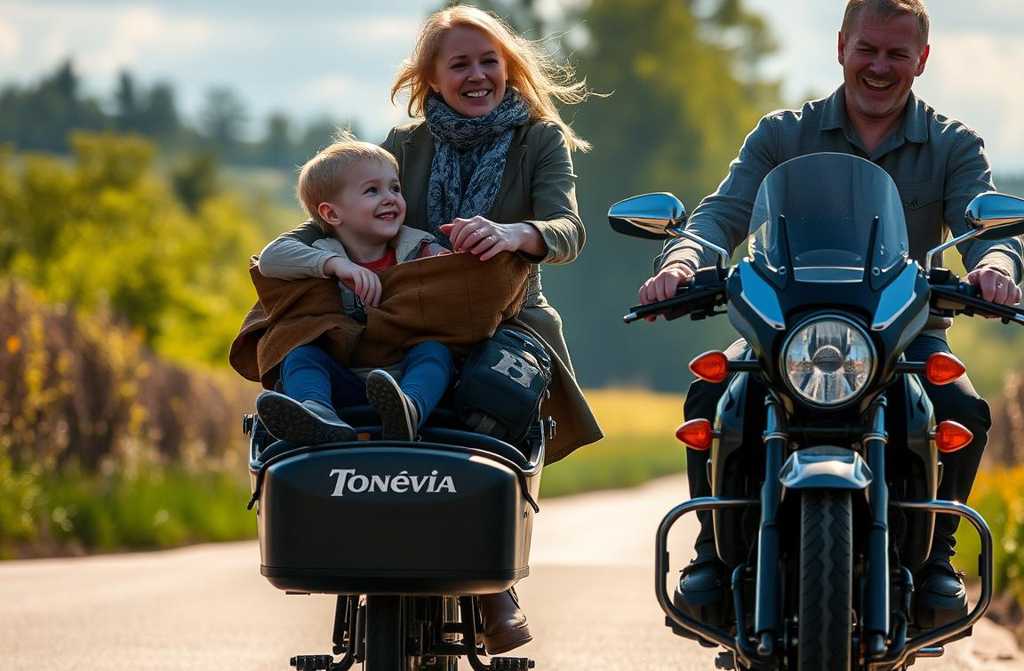
Ethan now speaks in short phrases, can read, uses a computer, enjoys cooking and tidying (under Olivers or Emilys guidance), loves sitting on the garden bench watching, listening, and smelling the world, knows all the neighbours and greets them. He delights in modelling clay and building and dismantling his Lego sets. But above all, he loves the family rides on motorbikes down country lanes Emily and Ethan on one bike, Oliver with Mark on another, all of them shouting into the wind.
Looking back, Ive learned that life does not always hand us neat packages. We may be given a walking vegetable, a wooden block, a motorbike, or a prodigy, but the true measure is how we choose to care, to adapt, and to find small moments of joy amid the chaos. The lesson I take with me is simple: love is not conditional on ability; it is the constant that steadies us when everything else spins out of control.