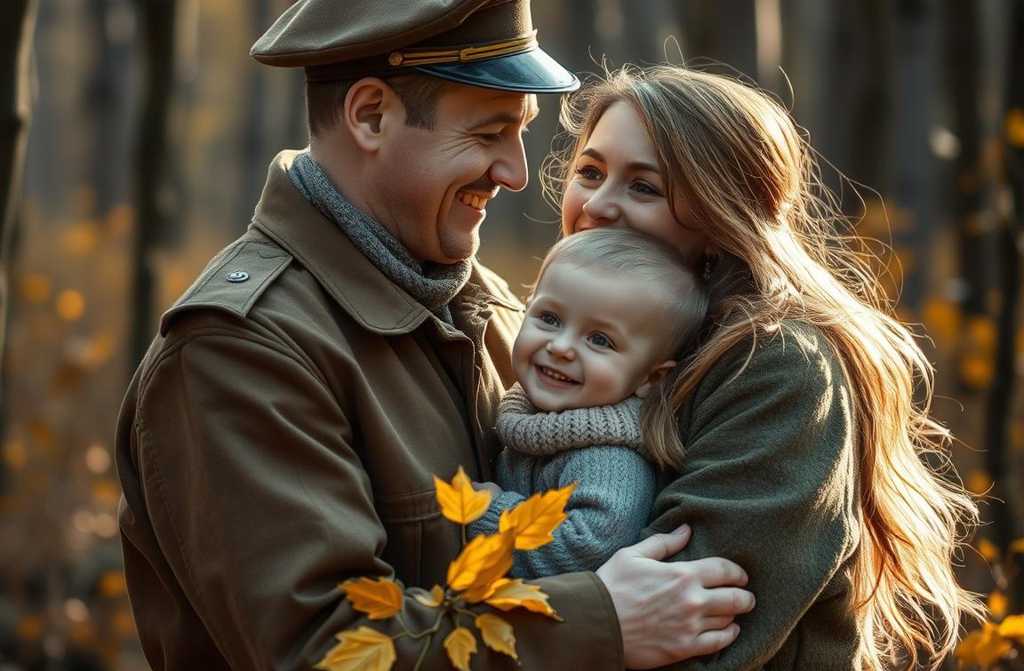
Fate favours the grateful, they say, and I have lived to see it in the old hamlet of Littleford, tucked away in the rolling hills of Yorkshire. By the time I turned thirty, I, Stephen Carter, had already logged ten years of service in the faroff hot zones of the worldtwo wounds to my side, the second a nasty shrapnel injury that kept me in a military hospital for months. When I was finally sent home, I returned to the place of my birth, a village that had altered itself in my absence, and its people, too.
All my schoolmates had long since married, taken up farms or joined the local mill, but one name kept drifting back to me: Eliza. I remembered her as a shy girl of thirteen when I left for the army, a wisp of a thing with braids that swayed in the wind. Now, at twentyfive, she stood tall, a real beauty with a smile that could melt the hardest stone, though she was still single. She had never met a man she felt she could marry, and she had no desire to settle without love.
I was broadshouldered and sturdy, with a sharp sense of right and wrong, and I could not walk past Eliza without speaking. Are you still waiting for someone, and still not wed? I asked, a grin tugging at my lips as I looked at her.
Perhaps, she answered, a faint blush colouring her cheeks, her heart fluttering at the thought.
From that moment we began to meet. It was a late autumn, the leaves rustling beneath our boots as we walked along a narrow lane bordered by ancient oaks. Eliza sighed, Stephen, my father will never allow us to marry. Hes already turned me down twice. She knew my family well enough to say, You know my father, dont you?
Whatever he does, Ill not be frightened, I replied confidently. If he harms me, the law will deal with him, and he wont trouble us any longer.
Elizas eyes widened. You dont know my father. He is a hard man, all his affairs tightly clenched.
Old Henry Whitford was the most powerful man in Littleford. He had started as a modest trader, but rumors now whispered of his connections with the darker side of commerce. He was a stout fellow with a round belly, a cold, calculating gaze, and a cruel streak that ran deep. In his youth he had built two farms, keeping cows and pigs, and employed more than half the village. Everyone bowed to him, a courtesy that bordered on worship, and he played at being a god.
My father will never consent to our wedding, Eliza said, especially since he wants me to marry the son of his old drinkingbuddy, a rotund and boozy fellow named Victor. I have told him a hundred times that I cannot stand the man.
It feels as if we are living in the stone age, I muttered. Who today can force a woman to marry a man she does not love?
My love for Eliza grew fierce; I adored everything about her, from the softness of her glance to the fire in her temper. She, too, could not picture a life without me.
Come on, I said, taking her hand and quickening my step.
Where to? she began to guess, but could not stop me.
In the courtyard of the great Whitford house, Henry was deep in conversation with his younger brother Samuel, who lived in the adjoining cottage and was always ready to lend a hand.
Mr. Whitford, Eliza and I wish to marry, I announced, and I ask for your daughters hand.
Elizas mother, standing on the porch, covered her mouth in shock, her eyes darting between her brutal husband and the daring young man before her.
Henrys face twisted with anger, his stare as sharp as a hawks. Yet I met his gaze straight on, unflinching. He could not fathom where my boldness sprang from.
Get out of here, Henry thundered. Youre a lunatic, a wounded fool. What were you thinking coming here? My daughter will never be yours. Forget this road; you are no more than a soldier.
We shall marry regardless, I said, my voice steady.
The villagers respected me, but Henry knew nothing of war, of the cost of blood and tears. To him, money was the only thing that mattered, and his greed made my blood boil. I clenched my fists, and Samuel stepped between us, aware that neither side would yield.
While Samuel ushered me toward the gate, Henry locked his daughter inside, treating her like a child of ten. He never forgave defiance, especially towards those who dared to speak against him.
That very night, a blaze lit the village. My modest garage, where I had just opened a small motorrepair shop, roared in flames. Bastard, I muttered, certain whose hand had set it alight.
Ten minutes later we were on the road, heading away from Littleford. The following night, I crept quietly to Elizas cottage. I had sent her a note earlier, urging her to pack a bag and leave with me far beyond the countys reach. She agreed. From her window she tossed a sack down to me, then slipped out, landing softly in my waiting arms.
By morning well be far away, I whispered. You have no idea how much I love you. She clung to me, her voice trembling. Im frightened, Stephen. It feels like the world is closing in.
We sped down the country lane, the wind whipping at our faces. The road ahead glittered with distant headlights, and a sleek black Mercedes, owned by Henry, swooped up beside us, cutting us off.
No, not this, Eliza gasped, her body shrinking with terror.
Henrys men, two hulking thugs, vaulted from the car. They dragged Eliza out by the arm. I tried to intervene, but a heavy blow sent me sprawling. They beat me mercilessly without a word, then climbed into the Mercedes and vanished. I lay on the verge of the road, bruised and bewildered.
Eventually I managed to crawl back to my cottage, where I spent a week nursing my wounds. The fire at the garage was ruled an accident, blamed on faulty wiring. I understood the truth, but my thoughts were consumed by Elizas fate. Her phone was dead, her messages unanswered.
Henry sent her to the city, to his sister Victorias house, leaving a tidy sum of £500 for her upkeep. He ordered, Do not let her leave the house, and never give her a phone. If she returns to Littleford, I will make her disappear, bury her in the woods if I must.
My dear Henry, Victoria whispered, horrified, why do you wrench the life from your own daughter?
She placed Eliza in a modest upstairs room, hoping the worst would pass while Henrys fury cooled. Whispers spread through the village that Eliza would marry Victor in town and never return.
Patience, child, Victoria advised one day. Your father will settle down. Find work and build a lifeperhaps without Stephen?
Without him? Eliza asked, tears welling.
Yes, without him, Victoria sighed.
Weeks later, Eliza discovered she was carrying a child. Victoria held her close, offering solace. Your father must never know.
Eliza wept, her heart torn between hatred for her tyrannical father and the yearning to tell Stephen about their son. She could not recall his number; Henry had smashed her phone. Even if Victoria offered hers, the thought of dialing seemed futile.
I hate my father! Eliza shrieked, her voice cracking. He is no man! Victoria remained silent; there was much to despise about him, enough to shatter destinies.
Time slipped by. I could not erase Eliza from my thoughts. I drifted through life like a ghost, uninterested in other women, working the land, even trying to drown my sorrow in drinkonly to find it bitter. Meanwhile, Eliza gave birth to a healthy boy, Matty, a spittingimage of me in his cheekbones and hair.
She visited occasionally, bringing treats for her son. Henry never learned of Mattys existence; he never set foot in the cottage, never suspected the secret that grew under his roof.
Four years passed, and Matty blossomed into a clever, lively lad. One spring, when the fields were awash with blossoms, Elizas mother arrived at Victorias house, her steps heavy with grief. She collapsed into a chair in the kitchen.
Alas, she cried, Henry is dying. The doctors say his cancer is advanced; they came too late. He was always a sturdy man, never one to linger in a sickbed.
Her eyes, bruised from years of his cruelty, welled with tears. How will I live alone?
No one mourned Henry; his companions, a few rough men, attended the funeral in June. Eliza refused to go, unable to forgive, and the crowd that followed him was thin, their whispers sharp: He treated people like rubbish; now heavens justice has struck him down.
The village buried Henry on a grey June day. His wife, a stoic woman, stayed at his side, her lips tight, saying nothing of the grandson she knew lived somewhere else.
Meanwhile, I was often away on guard duty, returning only when the seasons shifted. I lived with my mother, who, after years of bearing Henrys blows, had finally begun to recover, her health no longer a battlefield. Photographs of her husband were taken down; she did not want Eliza to see the man who had once ruled their lives.
Two weeks after Elizas return to the village, she learned that I had been posted to a remote outpost. She walked with Matty along the narrow lane, the boy darting after butterflies, she pausing on a fallen log as a gentle breeze brushed her face.
She thought back to her childhood, then to the love she had once known. Suddenly she felt a presence, as if the very air whispered her name.
Eliza, a soft voice called. She sprang up, and we both rushed toward each other.
I had changedmore seasoned, the edge of my eyes softened by sorrow. Yet the love that had lain dormant flared anew. Eliza, still as lovely as the day we first met, stood before me, and we held each other in a silent, reverent embrace.
Forgive me for everything, for my fathers sins, for never knowing of our son. I never married Victor; that was a lie my father spread. I lived with Aunt Victoria in London, I confessed, my voice shaking.
At that moment, Matty burst through the grass, his laughter ringing out. I lifted him high, recognizing instantly the boy who shared my own childhood face.
My son! I shouted, cradling him. Youre my boy, and I will never let you go.
Father, Matty asked, eyes bright, will you buy me a football?
Of course, lad, I replied, smiling at Eliza, whose tears fell like rain. Well go to the shop this very moment, and you can have whatever you wish.
Eliza thanked the heavens for this second chance. Fate, it seemed, truly favours the grateful, and it blessed us with a happiness we had once thought lost.