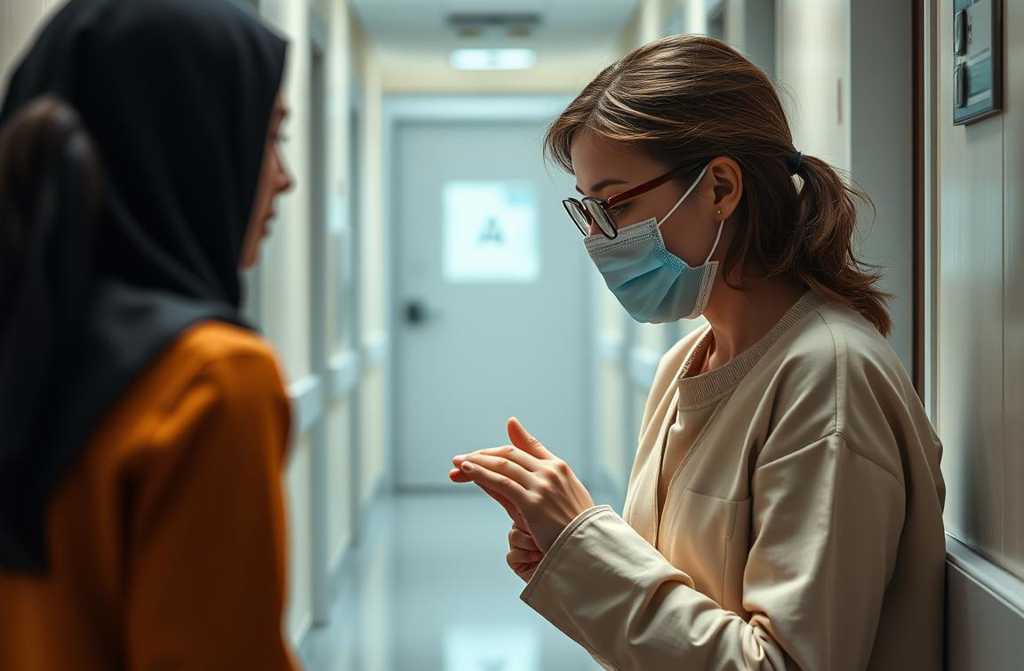
Dr. Emily Hart was the physician assigned to us, reputed to be an excellent clinician. We felt fortunate. Id never seen her face; the mask and spectacles were permanent fixtures. She was an infectiousdisease specialistbrilliant with bacteria, hopeless with bedside manner.
Throughout the weeks she tended my daughter Milly, she never offered a comforting word. Her language was pure numbers and cold facts.
Leukocytes at twelve.
Is that good?
Its down from before, but still above the normal range. The fontanelle has collapsed a bitdry.
Is that dangerous?
Ill prescribe a drug; it should stabilise the count.
She spoke reluctantly, fielding endless questions from parents crowding the ward. Every sentence she uttered could be twisted against her later, so she chose each word with the care of a lawyer examining evidence. Emily wanted only to treat, silently, without interrogation. But that was impossible.
I could not decide whether I liked her or not; I was forced to trust her. My daughters health rested in her hands. She never tried to soothe my panic, perhaps because soothing wasnt her jobshe was there to battle infection, not hysteria.
I saw fatigue in Emilys eyes, redrimmed as if shed been crying. I stopped asking questions. All I could see was Milly improving. Two days earlier she had been barely conscious; now she sat up, smiled, and ate an apple with appetite.
Emily examined Milly, listened to her breath, gave a quick wink and said, Well done, Milly. She said nothing to meI didnt ask.
After lunch a oneyearold boy was wheeled in, terribly ill. Emily phoned the regional hospital. The infection ward at St. Marys had no intensive care, and the central unit bluntly replied, He has a neuroinfection; treat him here, we have no beds.
Emilys shift ended at three. She had a husband, Mark, and two children of her own. The little boy, however, needed her. She stayed, demanding a neurologist and a specific medication, arguing with the central team and with Mark, who insisted she go home because the child wasnt hers. The nurses fell silent; they were used to senior staff disappearing after three oclock, leaving the night staff to fend for themselves.
The infants mother, Linda, occupied the adjoining bay, speaking loudly on the phone. I could hear every word: she begged acquaintances to pray for Petey, reciting long litany after litany, asking a parish priest to intercede, insisting that a priests prayer would reach God faster than a laypersons.
Later that evening Emily entered their bay and told Linda that the drug had to be bought privately because the hospital didnt stock it. Write it down, she instructed, dictating a list that included a neuroprotective tablet called Cerebex.
Linda erupted, We pay taxes! Treat my child! This is extortion! Ill sue you! Emily said nothing and left.
We also gave Milly Cerebex, purchased ourselves. I heard Linda curse the pharmacy, demand that Mark bring icons and holy water. I had a spare pack of Cerebex and slipped out of the ward, despite the ward being a sealed area. I was looking for Emily.
In the oncall room she was dictating a prescription to Mark, oblivious to me standing behind her.
Violet, bring it now. The boys will be alone for twenty minutes. Not little ones
Mark shouted on the other end of the line, Pharmacy closes at ten. Then youll hear what a bad mother I am.
I called out, Heres Cerebex. I have an extra pack. Let them keep theirs.
Emily startled, turning fully to face me for the first time without her mask. She was striking, eyes still rimmed red.
Ah, thank you, she said, then into the phone, Cerebex isnt needed, weve found it.
I slipped a hundred pounds into the pocket of her coat.
Youre mad, you dont need that! she snapped, grabbing my wrist.
It isnt for you. Its for Petey.
She lowered her gaze, whispered, Thank you, and corrected herself, For you.
I corrected her, For you, and returned to my bay.
That night Peteys condition worsened. Halfasleep I heard Emily directing the nurses on drip rates and feverreduction measures, while Lindas prayers floated in the background.
When Milly fell ill, a thousand strangers offered help. Roughly eightyfive per cent of them prayed, reciting specific verses and urging me to confess, to bring a priest, to light a candleA mothers prayer from the ocean floor will reach the child.
Five per cent suggested alternative therapieshomeopathy, osteopathy, acupuncture, Reiki, a local healer.
Ten per cent pragmatically gave me contacts for reputable doctors, urging me to fly to Europe, saying, Theres no good medicine here.
By morning Peteys fever broke. He slept soundly; his mother drifted off too, and the only sound was snoring, not chanting.
Emily hadnt slept at all. At nine she began her next shift, making her rounds. She entered our bay.
Leukocytes nine, she announced.
Thank you, I replied.
Thats good. Inflammation is receding.
Yes, I understand.
I asked nothing else, feeling a deep sympathy for her. Emily, still masked and behind her glasses, had eyes still reddened as if shed been weeping. She moved on to the other patients.
At three she finished her shift. Petey was much better, cheerful, eating well. Before leaving, Emily stopped by his bay one more time, checking that everything was alright, coaxing the boy to let her listen to his heartbeat.
At that moment Lindas phone rang, and she shouted joyfully, Hes healed! Hes healed!!!
I looked out of my window as Emily trudged home, her gait heavy with exhaustion. She was an outstanding infectiousdisease doctor, a genuinely caring persona messenger of hope, if you will. She had beaten Peteys illness with knowledge, experience, and antibiotics. Now she walked home, depleted, without thanks. The work never ends.
Hes healed