Oh, dear, dont fret, love. She was a tiny, premature thing, but sturdy as an oak sapling. Everything will be all right with your daughter and with your granddaughter alike.
Thank you, Godgrant, whispered the woman as the doctor faded down the corridor, then, after the door shut, muttered to herself, what a sorrow.
The sorrow fell upon Evelyns household six months ago, when a nosy neighbour, Mrs. Hattie, popped over for a cuppa and a spoonful of jam, and, as if by chance, let slip:
When are you expecting the little one? Already buying nappies?
What little one? youre babbling, Hattie, snapped Evelyn.
What? I saw your calfherd girl, Clara, twice this week, washing the trough. I watched her bolt out of the barn with a kitchen towel over her mouth.
Maybe she ate something odd, tried to hold the line, Evelyn attempted, though shed never known labour herself. Im no old wife, Im clueless about such matters.
That evening Aunt Evelyn interrogated Clara, then wept for hours, cursing the fickle fate that left her with an unborn child a sunkissed prankster whose track had already cooled, taking the whole male line with it.
When little Milly arrived, her shrill voice did not bring joy, only chores, hurt and a burning shame. Claras affection was cold; she lifted Milly only to feed or change her, nothing more. Aunt Evelyn looked at her granddaughter with indifference, love never blooming. It was already the fourth granddaughterwhat reason for celebration? Even the girl her own daughter bore was of little note. So Milly entered this world unloved, stumbling on trembling legs through a life that never seemed to belong to her.
A year later Clara moved to the workers settlement near Sheffield, seeking her own modest happiness. Milly stayed with Aunt Evelyn, a proper grandmother, not a stranger. The girl required no special care, ate what was given, slept on schedule, never fell ill. The doctors prognosis held true: Milly was robust, yet still unloved.
Milly lived with her grandmother until she was seven. In those years Clara learned the painters trade, married, and had a son named Tom. Then Clara remembered Milly, now a grown girl who might become a mothers helper. She travelled back to the village for her child, but Milly, who saw her mother only twice a year, showed no particular delight. Clara scolded her:
Oh, Milly, youre as distant as a stranger. Another would have flattered, curled up, but you stand here like a ghost
Seeing Milly off, Aunt Evelyn shed a quiet tear, felt a pang of longing for a few days, then, the following Saturday, her elder son brought two beloved granddaughters, Lucy and Emily. The house swirled with new errands, and Milly slipped from thought. The unloved Milly felt little pity for her aunt, yet the parting from the newly hatched yellow chicks drew rivers of tears.
In the workers settlement Milly did not love the place, but she had no choice. Over time she adjusted, made friends, went to school, did her homework, ran to the shop for bread and milk, peeled potatoes for her mothers return. As she grew, she escorted Tom to nursery, and, mimicking her mother, told a lanky boy:
Watch your step, thats my punishment. My strength is lacking! I pull my own ropes with the last of my vigor, and you give me no aid!
Tom never heard words of love from his sister, and neither did Millyshe never expected them. She barely suffered; she knew nothing else could be.
She did hear the gentle nicknames friends mothers used, and her own mother called Tom sunshine or kitty. Milly, once called Millicent, believed she could never be a sunshine; she was older, unlike Tom.
At home Milly was not coddled but not starved. She never got fancy treats or saltladen pies, yet she was not gaunt or famishedjust unloved.
At fifteen she fled the chilly house that had not felt like home for eight years. She enrolled in a city culinary college, dreaming of devouring endless pastries. The city of Manchester welcomed her, along with three other girls sharing a dormitory, each tending to their own kitchens after lectures.
Then she met James, and the world burst into colour. Though November was bleak, the sun shone for Milly as never before. The dormmates would step out for a halfhour to watch the redcorner television. James whispered beautiful words that sent her head spinning, breath catching.
Youre my beloved, he murmured, and Milly, accustomed to perpetual neglect, melted into happiness.
Soon morning nausea visited her. She should have rushed to a doctor, but missed the appointment. At eighteen Milly had no choice but to produce a doctors note and, handinhand with a newly restless James, head to the registry office.
Thus began her married life, and simultaneously her brief romance faded. The young couple moved into Jamess parents cottage. Jamess mother and grandmother offered no special affection, yet they gave Milly a modest room. Where else to go? they thought; she was not the first, nor the last, to settle quietly.
A friend from the settlement envied her:
Lucky you, youll live in the city, become a citywoman.
Milly did not argue. Her city life was not a single label. The house lay in a private estate with village comforts; the water tap sat at the end of the lane, a stones throw from the garden. She never complained; she was accustomed to routine. She hauled water buckets, splashing the cold liquid, feeling her feet chill. In that icy stream she imagined spilling the life of a child still unborn. Her motherinlaw scolded her, but was it really Millys fault?
James seemed to pity her, brieflyperhaps a day or twobefore wandering off with his mates. His mother and grandmother did not chase Milly from the house; she stayed, helped where she could, hoping something might grow. It did not. After a while James brought home another woman, declaring he never loved Milly, never had.
Milly confided in her dormmates, wept a little, then steadied herself. She packed her few belongings, obeyed the motherinlaws command to leave in all directions, and closed the door on the strangers home.
She moved into a factory dormitory, where a canteen sat on the works, the entrance nearby, and a workers club just a few steps away. Live, be merry, they said. Milly found solace there, not a curse nor a wilt, but a simple happiness. She walked to work with comrades, returned to the club, watched films together.
Visits home to her mother, stepfather, and brother became rare. They did not await her, and she did not impose. Grandmother Evelyn died when Milly turned twentyone. She attended the funeral, glanced at the places that once felt familiar.
Evelyns will left her cottage to beloved granddaughters Lucy and Emily. Milly felt no grievance; they were the cherished berries of their grandmothers garden, while she was the cutoff branch, the unloved grandchild.
If Milly had claimed the inheritance, the relatives would have torn over Evelyns modest fivehundredpound estate. The loudest cries came from Millys mother, Clara, wailing that the dear Tom had been left a bent spoon by the old woman. Isnt he a grandson? she sobbed, Not less than Lucy or Emily. Yet Clara never recalled her elder daughter. Milly never received a bent spoon.
Milly tried twice to arrange a life, dated men, but none endured. At the registry office no suitor ever followed her, and she never rushed there again. One man drank and kept a mistress; another drank and struck. Choose whats worse, whats betterMilly decided she was glad not to be tangled in the registrys paperwork. She tossed her few belongings into a padded suitcase and returned to the staterun bed shared with dear friends.
Evenings in the dorm, she no longer hurried; after a decade of hopping between wards, foreign beds grew weary. It was no surpriseshe was nearing thirty, and any woman, lonely, craves a corner of her own, a pot on her own shelf. Single women were given apartments at the very end of the queue; families came first.
Sometimes Milly visited Aunt Maggie, who washed floors at the factory administration, for hearttoheart talks. After three or four months of such chats, Aunt Maggie turned to Milly with concern:
Mil, a year ago my niece died in childbirth, leaving a baby girl and a husband. Ive been watching you; youre a capable, industrious woman. Her husband, Matthew, is a decent mandoesnt beat, drinks only on holidays, and in moderation. He may not be a smooth talker, but hes kind. Think about it; the little girl will call you Mum
Milly thought, then moved in with Matthew. She painted his room for the May holidays, bought assorted curtains, sewed little dresses from green and white florals, and from yellow and blue for the child. The baby, Sweetie, soon began to babble, calling Milly Mum.
Matthew was gentle, never hurt his wife, gave his wages, never uttered harsh words. Yet Milly never heard words of love from him; she was unused to such expressions, having grown up unloved. She had already reconciled to a life without affection.
Three years into marriage, loves words finally camenot from Matthew, but from Sweetie, who ran from the yard clutching yellow dandelions, hugged Milly, planted a candysweet kiss on her cheek, and whispered:
Mum, I love you. I love you more than anyonemore than Dad, more than Aunt Maggie, more than my doll Yvonne.
Milly embraced her daughter, laughing and crying together, finally feeling beloved.
A year later she gave birth to a boy, Oliver. Matthew tended to his wife at night, changed nappies, helped pull the stroller from the front steps. Soon the factory granted them a spacious, lightfilled flat. Live and be glad, they said, and Milly found reason to smile.
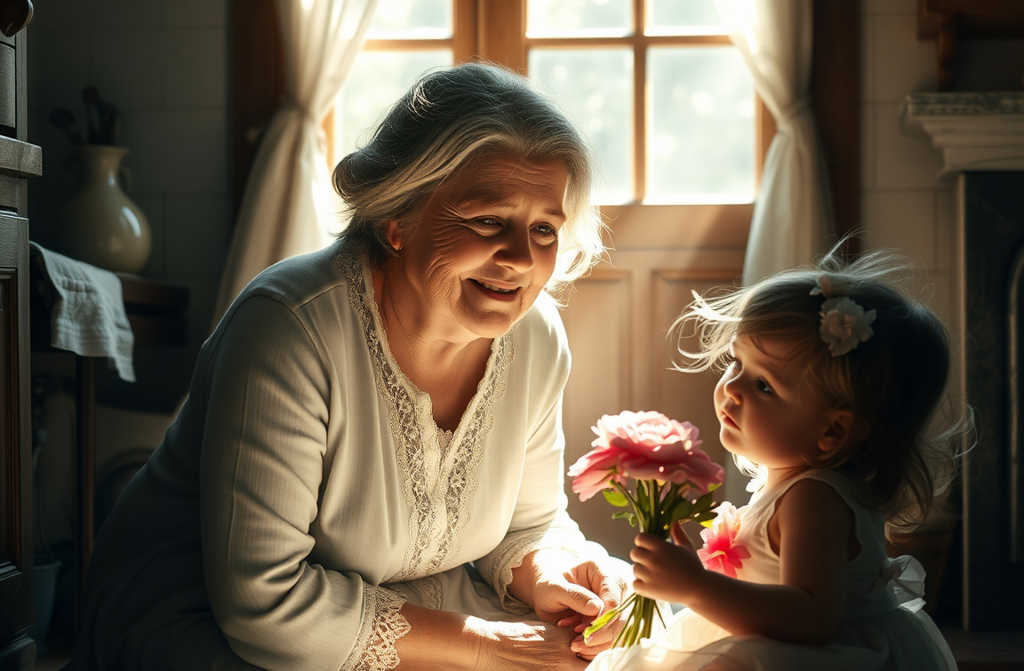
Years passed; they raised their children, welcomed grandchildren. In their garden cottage, silverhaired Milly simmered jam, while the youngsters played nearby.
Grandma, I love you, shouted Olivia.
Grandma, we love you too, echoed Daniel.
Grandma, I wub wub, gurgled little Maisie.
We all love Grandma, said Granddad Matthew, hiding a grin in his beard.
Milly quietly brushed away a stray tear. Decades earlier she never imagined that a life begun unloved could overflow with such love.