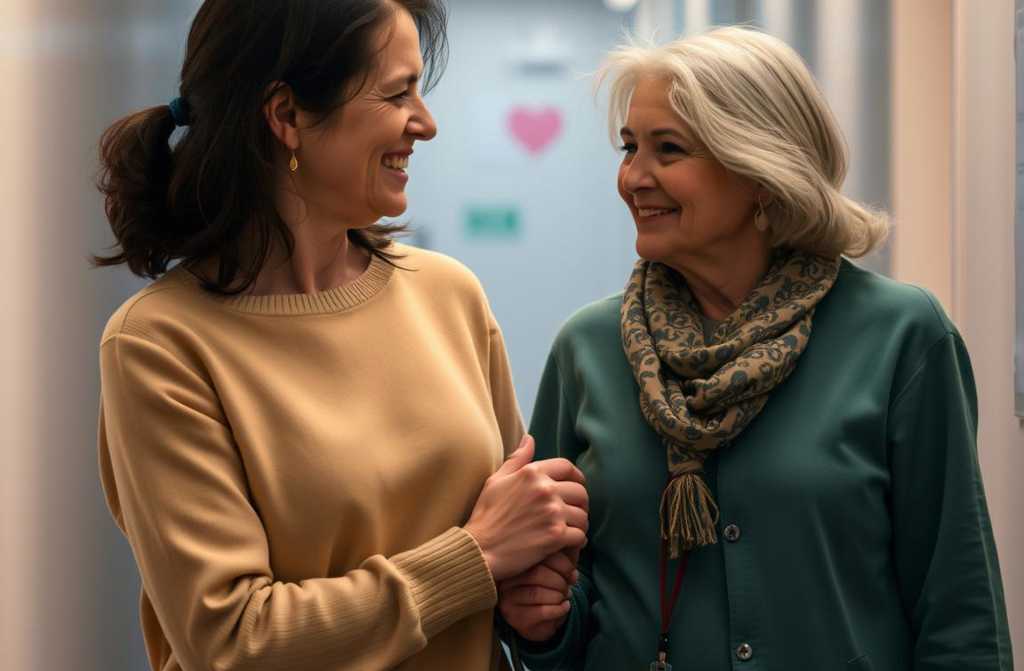
Margaret, a fortysevenyearold with tired eyes and her chestnut hair pulled into a bun, now left the house almost every weekday with her daughter Emily at about ten in the morning. Late March in Bristol was still a bit chilly: puddles glistened where the last snowbanks had melted, and a teasing breeze reminded everyone that spring wasnt quite up to speed yet. Emily, twentytwo, looked like an ordinary young woman, only she was unusually jumpy, as if she expected the floorboards to start whispering. A few weeks earlier her therapist suggested a dayhospital for anxiety disorders. Margaret took the advice with a mix of relief and dread she wanted to believe the place would help, but the word hospital still sounded frightening.
As usual, they walked to the nearest bus stop, Margaret slowing at traffic lights so the sudden roar of a car wouldnt startle Emily. They arrived at the clinics front door in a careful, measured pace.
The staff explained that a dayhospital works like an extended therapy session: patients stay from morning until early evening but go home to sleep. Relatives are welcome from nineinthemorning until sixintheevening, provided they follow the rules leave coats in the cloakroom, wear disposable shoe covers and keep phones on silent. Margaret caught herself switching her phone to vibrate the moment she walked in, lest a sudden beep frighten Emily. The girl flinches at any sharp sound, so Margaret tried to keep the atmosphere as calm as a library.
The morning already felt tense. Hours lay ahead inside sterile corridors where the usual spring scenery would be replaced by uniform white lighting and hushed conversations between doctors. The past few months had been a grind for Margaret. She worked for a small recruitment agency, juggling phone calls, interview schedules and endless paperwork. Emilys anxiety had crept in slowly: at university she began skipping lectures, shying away from crowds and complaining about a racing heart before exams. At first Margaret chalked it up to typical student stress, but after a couple of panic episodes they finally saw a counsellor. Thats when they both agreed it was time to slow down and keep a closer eye on Emily.
Margaret sensed that todays plan leaving Emily under observation while staying close would introduce something shed long avoided. Deep down she hoped the clinic would bring her daughter some peace, yet she wouldnt admit that she herself was constantly on edge, suppressing her own worries.
In the cloakroom she hung her long, warm coat and slipped on the shoe covers. Emily squeezed Margarets hand before a nurse whisked her away for the first assessment. Margaret shuffled down the hallway and saw a mixed crowd of people. Most were over forty, some looking anxious, others more relaxed. In a corner a married couple whispered quietly their son must have been a patient. A woman sat with a battered handbag on her lap, trying to smile at each passing doctor. The general vibe was one of restrained tension: everyone waited for permission to visit loved ones, yet no one wanted to intrude.
Margaret kept her distance at first, her own worries about what the doctors might say for Emily swirling around her. Then a fellow mother in her fifties, shorthaired with a single earring, caught her eye. She seemed friendly despite the fatigue in her gaze. Bored and nervous, Margaret sat beside her and nodded. The woman answered in a soft voice, First time here? I took my son to a different hospital once, but they were all businesslike. This place feels different. Margaret nodded back and replied, Im hoping for the same. They said the dayhospital offers group work and isnt just about medication. The other mother introduced herself as Lucy and explained that the centre also runs parentcounselling. Margaret realised she was hearing other peoples stories that mirrored her own.
A nurse in a pale coat announced that the specialists were running behind schedule, so some families might have to wait another half hour or more. Margaret glanced at her watch, remembered a brief stop at work later that day, but decided staying with Emily was more important. The thought of work calls nagged at her, a guilty little voice reminding her that nothing ever runs perfectly. Lucy noticed the tension and suggested, Shall we grab a tea in the lounge? It might take the edge off. Margaret agreed, and they descended a few steps to a modest break area with a couple of tables. Margaret poured herself a cup, but the tea tasted more like warm water than comfort. Her mind kept drifting back to Emily, wondering if the doctor had frightened her too much.
When they returned, the corridor buzzed with movement: patients emerging from rooms, others heading to group sessions, a few signing paperwork at the reception. Emilys nurse brought her back, and the girl, slightly flushed, sat down and reported that the doctor had asked about the frequency of her panic attacks, prescribed a mild tranquiliser and invited her to a later group meeting. While Emily was away for a bathroom break, Lucy reappeared with her own teenage daughter, a short, darkhaired girl. They whispered about the schedule, Lucy asking, Did the doctor tell you when the groups start? Margaret sighed, Not yet they promised to let us know by noon. I feel well be here a while. A muffled sob drifted from a closed door nearby, reminding everyone that the walls had already seen tougher cases than Emilys.
A memory flashed: a year ago Emily had confessed she sometimes felt like she couldnt take a full breath, as if her chest were being squeezed. Margaret had tried to rationalise it as simple fear. Now, in the semiquiet hallway, she recognised those sensations in herself as well. Shed often feel her own pulse race over trivial things a clients call, a family argument and brushed it off as fatigue. Watching other parents flinch at every rustle, she saw her own hidden fear reflected back.
By midday most relatives had reached a sort of truce with their own anxieties: some stepped outside for fresh air, others leafed through brochures about therapy programmes. Margaret spotted a poster for extra support sessions for families, emblazoned with, Family anxiety matters just as much as the patients. The words gave her a strange prickling in her chest. She glanced around; Lucy was waiting patiently for her daughter, the married couple were deep in conversation about their son, and everyone seemed to be there for someone else, yet perhaps also for themselves.
A doctor on duty passed by, smiled and asked if everything was okay. Margaret gave a mechanical nod, though a wave of anxiety rose to her throat. She realised shed been so busy with Emilys worries that shed ignored her own tightening shoulders that had been clenched almost roundtheclock. It was a turning point: either keep pretending she had everything under control or admit she, too, needed help. Deep down she chose the latter.
Taking a steady breath, Margaret glanced at the clock near the end of the hallway Emilys appointment would soon end, and the doctors would likely invite relatives for a quick chat. In that instant she felt there was no turning back. She had to support her daughter and, at the same time, face her own concerns. She didnt know exactly how to voice it, but she knew the next minute would be different. She clenched her hands, rose from the chair and felt shed made a important choice. Nothing would be quite the same again.
Later, Margaret settled into a hard chair as Emily emerged from the doctors office, shoulders slumped. It was late afternoon, the windows letting in a muted, grey light as the day edged toward evening. Emily told her the doctor had prescribed medication for the coming weeks and would monitor her progress. A joint consultation was promised, but they were asked to wait a bit longer. Margaret offered a brief smile, noticing how Emilys hands trembled slightly from the lengthy session. She felt a mixed relief: Emily was finally getting help, yet the situation demanded patience from both of them. She also sensed that she herself should soon speak up about her own worries.
Lucy, who had become an unexpected friend, slid back into the seat beside Margaret. Her daughter stood a little way off, flipping through a brochure about group activities. Margaret asked quietly how their assessment was going. Lucys answer was a little scattered, I think well need several sessions. The programme is holistic exercises, talks, oneonone time with specialists. She turned to Margaret, eyes softening, You know, we all hope our kids think weve got life together, but were often just hanging on by a thread. Margaret felt a warm lump rise in her throat; it was exactly what she had been feeling focusing solely on Emilys anxiety had made her lose touch with her own emotions.
Patients shuffled from room to room, parents tried not to interfere. Some whispered to a sibling, others leafed through a book, but everyone kept glancing at the clock; appointments and group work could stretch until six. Margarets back began to ache from sitting too long, so she suggested a short walk for Emily. The teenager agreed, looking a little calmer now that the medication might ease her heightened anxiety. As they strolled past a stand with leaflets for relatives and a table of disposable cups, Emily asked, Mum, do you ever feel like like this yourself? Margaret hadnt expected the question. Sometimes, she admitted, and a wave of relief washed over her, even as a slight tension lingered in her shoulders.
Soon a nurse appeared, announcing that a familytherapy room was now available for short consultations, and invited them in. Margaret instinctively checked her pocket for a ringing phone, but it was still on silent, tucked deep in her skirt. They entered a modest room with a small table and two chairs. The therapist, a gentleman in his early fifties with a kind face, greeted them, listened to Emilys brief report, then turned to Margaret.
How are you holding up? he asked softly. Margaret felt a pang of fear at the question, but remembered the tremor in her hands, the sweaty palms, the sleepless nights filled with vague dread. She took a breath and answered, Its not easy. I thought the focus would be on Emilys therapy, she continued, but perhaps I should look after my own anxiety as well. The doctor nodded, explaining that the centre also offers group sessions for relatives dealing with burnout and fear. If youd like, we can arrange a meeting with our psychologist, he offered. Its an extra option, but many parents find it helpful.
Margaret glanced at Emily, who gave an unmistakable look of encouragement: you can try it too, Mum. The mothers heart swelled with gratitude. In that moment she realised Emily didnt see her as an indestructible rock; she just wanted her mother nearby, not at the expense of herself. Margaret pressed her lips together, nodded to the doctor. Alright, Ill give it a go. He made a note and wished them well, saying they could continue the discussion whenever they liked.
Back in the corridor a few other visitors lingered. Lucy stood nearby, waving as they passed. Her daughter had slipped back into her shoes and was ready to leave. Lucy approached, All good? she asked with a caring look. Margaret managed a weary smile, Yes I think Ill sign up for the parent group too. Looks like its time to look after myself as well as the kids. Lucy nodded, My therapist always says if were sleepdeprived and crushed, we cant really help anyone else. She asked for Margarets number so she could remind her about the sessions. Im doing it too, Margaret replied.
Margaret buttoned her coat, checked that Emily didnt need to linger, and waited as her daughter slipped on her boots. The dayhospital would close in about an hour, and staff were busy preparing tomorrows schedule. Lucy and her daughter said goodbye, promising to meet again at a breathingtechnique workshop. Margaret watched them go, feeling a strange blend of confusion and joy: strangers had turned into allies, sharing the same tangled feelings.
Outside, the cold wind brushed their faces. The sky was a dull grey and street lamps flickered on lazily. A bench near the bus shelter held a few people waiting for their loved ones. Looking at them, Margaret saw a reflection of her own frightened eyes, the effort to stay strong for someone else. Yet inside she no longer felt alone. Hours earlier she had feared admitting her own problems, seeing it as a sign of weakness. Now she understood the opposite: the biggest anxiety comes from hiding it from everyones gaze.
They walked slowly to the bus stop, careful not to startle Emily with the rumble of traffic. When the bus finally appeared in the distance, Emily turned to her mother and asked softly, Do you regret agreeing to these sessions? Margaret rested her hand on her daughters shoulder. Not at all. If we want to get out of this mess, we both have to work at it. Emily nodded and gave her a gentle hug. A wave of realization washed over Margaret: she wasnt just needed by Emily, she too deserved support.
The bus doors opened, and Margaret helped Emily aboard. The interior was cramped but dry, and they settled side by side. Margaret tried to recall how many fortnightly psychotherapy meetings were typical she would find out tomorrow. The important thing was that she had finally decided not to keep herself out of sight. Emily rested her head against the window, and Margaret felt a mild ache in her back, straightened her shoulders and looked out at the dim city beyond the glass. Streetlights flickered, hinting at change. It wouldnt be easy or quick, but they had already stepped onto a path where every family member has the right to seek and receive psychological help. Margaret smiled quietly to herself, thinking that tomorrow might just bring a fresh dose of strength for both of them.