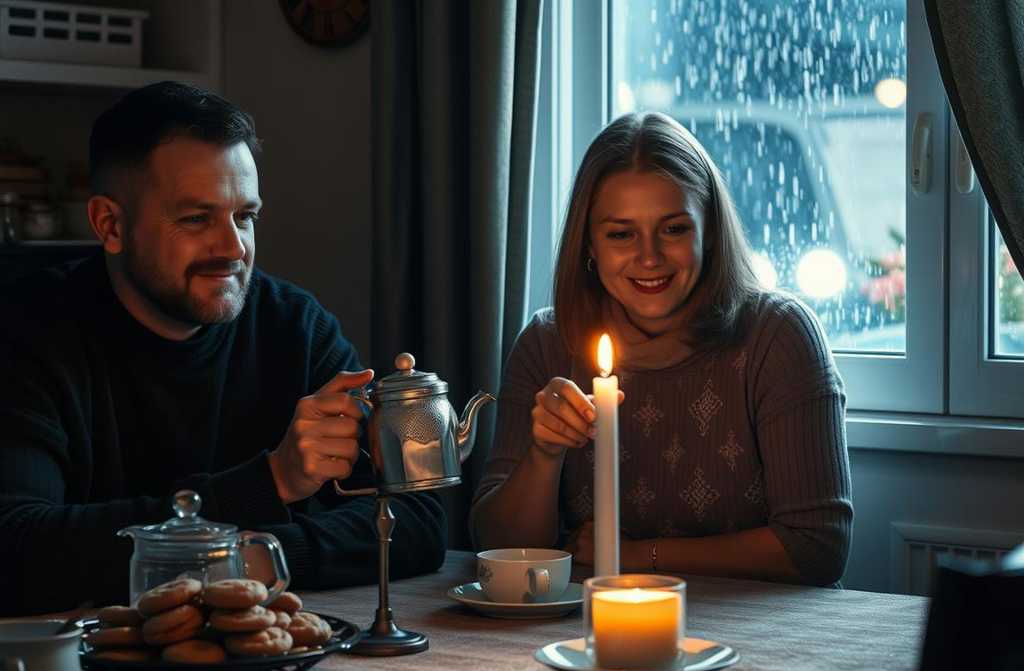
Andrew Clarke trudged home along the narrow lane behind the terraced houses, where puddles halfconcealed by fallen oak leaves caught the weak glow of a few streetlamps. Late autumn in the north of England was no time for wandering: the damp wind cut straight to the bone and the houses seemed oddly distant, their windows watching him with indifferent cold. He quickened his step as if trying to outrun an invisible weight that had settled on his shoulders since sunrise. Tomorrow was his birthdaya date he habitually tried not to notice.
Inside, a familiar pressure built: not the eager anticipation of a celebration, but a thick, heavy knot in his chest. Year after year the same routine unfoldedformal messages, brief calls from colleagues, polite smiles. It all felt like a foreign play in which he was forced to act the celebrant, even though he no longer felt any part of it.
Once, things had been different. As a boy, Andrew would rise early, heart thudding with excitement for the day, believing in a tiny miraclethe scent of a homemade cake with buttercream, the rustle of wrapping paper, his mothers warm voice, and the chatter of guests around the table. Back then congratulations meant genuine laughter and bustling hands. Now those memories drifted up only rarely, each one leaving a faint ache in his wake.
He turned the key in the flats door and a rush of cold air slapped his face. The hallway greeted him with its usual disarray: a dripping umbrella propped against the wall, jackets haphazardly hung on hooks. He slipped off his shoes and paused at the mirror; his reflection showed the fatigue of the past weeks and something elsea fleeting sorrow for a lost sense of festivity.
Are you home? his wife, Mabel, called from the kitchen, not waiting for an answer.
Yeah he muttered.
They had long grown accustomed to these clipped evening exchanges: each occupied with their own tasks, meeting only over dinner or a cup of tea before bed. Their family ran on routinereliable, if a little dull.
Andrew changed into his houseslippers and drifted into the kitchen, where fresh bread still lingered in the air and Mabel was chopping vegetables for a salad.
Will there be many guests tomorrow? he asked, voice flat.
As always, you dont like noisy crowds Maybe well just have the three of us? Invite David, your mate, she replied.
He nodded wordlessly and poured himself a mug of tea. His thoughts tangled: he understood Mabels logicwhy stage a celebration just for show? Yet something inside bristled against this grownup pennypinching of emotions.
The evening stretched on. Andrew thumbed through news on his phone, trying to drown out the intrusive thoughts about the next day. Still, the same question kept looping: why had a birthday become a formality? Where had the joy gone?
Morning arrived with a barrage of notifications from work chats; colleagues sent the standard Happy Birthday! stickers and GIFs. A handful of messages were a shade warmer, but every line sounded strangely interchangeable, as clear as glass.
He replied with an automatic Thanks! or a quick smiley. The emptiness deepened; he caught himself wanting to shove the phone away and forget his own date until the next year.
Mabel turned the kettle up, the whirr cutting the silence at the table.
Happy birthday Listen, how about ordering a pizza or some sushi tonight? I dont feel like being at the stove all day, she suggested.
Whatever you like, Andrew answered, irritation slipping into his tone. He instantly regretted it but said nothing more, the frustration simmering beneath his calm exterior.
Midday, David rang.
Hey, mate! Happy birthday! See you this evening? he asked.
Yeah swing by after work, Andrew replied.
Great, Ill bring something for tea. The call ended as swiftly as it began, leaving Andrew with a strange fatigue from those brief exchangeslike they existed more for habit than for him.
The day drifted in a halfsleep. The flat smelled of coffee mingled with the dampness of wet coats in the hallway; outside the drizzle persisted. Andrew tried to work from home, but his mind kept drifting back to childhood, when any birthday felt like the event of the year. Now it dissolved into another checkbox on the calendar.
By evening his mood had turned heavy. He finally realized he could no longer endure the hollow calm that kept everyone placid. He didnt want to keep up appearances for Mabel or for Davidno matter how awkward or foolish it felt to voice his true feelings.
When they gathered around the lowlit kitchen table, rain drummed against the windows louder than usual, underscoring the cramped world they inhabited on a November night.
Andrew sat silent, his tea cooling untouched, words stuck in his throat. He glanced first at Mabel, whose tired smile reached his eyes across the table, then at David, who was halfengrossed in his phone, nodding faintly to a distant tune.
Finally he broke the hush.
Listen I need to say something, he began.
Mabel set her spoon down; David looked up from his screen.
I always thought it silly to throw parties just for the sake of it But today Ive realised something else. The room fell so quiet that even the rain seemed louder.
I miss a real celebration the kind from when I was a kid, when you waited all year for the day and everything felt possible. His voice trembled, caught on the edge of emotion.
Mabels eyes held his, soft and attentive.
You want to try and bring that back? she asked.
He gave a barely perceptible nod.
Davids grin warmed.
Now I get why youve been moping all year! he chuckled.
A lightness rose in Andrews chest.
Alright then, David said, rubbing his hands together, lets remember how it used to be. You used to talk about the cake with the frosting
Mabel rose without a word, opened the fridge, and pulled out a pack of plain biscuits and a jar of strawberry jam. There was no sponge cake or buttercream, but the gesture was absurdly human. In moments, a plate of biscuits, a mug of jam, and a small bowl of condensed milk appeared on the table. David held his hands theatrically to his chin.
A quick cake! Got any candles?
Mabel rummaged through a junk drawer and produced the stub of a paraffin candle, trimmed it down to a crooked wick. They stuck it into the makeshift mountain of biscuits. Andrew stared at the humble creationunpretentious, earnestand felt a flicker of anticipation.
Music? David asked.
Not the radiosomething our parents used to play, Andrew replied.
David fiddled with his phone while Mabel hit play on an old laptop. Vocals from the late 70s filled the room, stitching together with the rains rhythm. It was oddly comic watching grownups stage a private theatre for one of them, yet the façade of conventional birthday wishes evaporated. Each did what they knew best: Mabel poured thick tea into sturdy mugs, David clapped awkwardly to the beat, Andrew found himself smiling without any pretense.
The flat grew warmer. The misted windows reflected the lamps glow and the street beyond, where cars passed in slivers of light. Andrew now watched the rain as if it were somewhere else, while his own weather brewed inside.
Remember playing Charades? Mabel asked suddenly.
Of course! I was always terrible at it Andrew laughed.
It wasnt because you were bad, just because we laughed too long, she replied.
They tried the game at the table. At first it felt oddan adult pretending to be a kangaroo for two friendsbut within a minute genuine laughter erupted. David flailed his arms so wildly he nearly tipped his tea, Mabel giggled quietly, and Andrew finally let go of his tightlipped expression.
Stories of past birthdays spilled out: who hid a slice of cake under a napkin for a second help, the time they shattered Mums china and nobody scolded them. With each memory the oppressive cloud of formality dissolved, replaced by a snug, warm glow. Time stopped feeling like an enemy.
Andrew sensed that childhood feeling againthat everything seemed possible, at least for one evening. He looked at Mabel with gratitude for her simple care, and caught Davids eye across the table, finding understanding without a hint of ridicule.
The music halted abruptly. Outside, a few headlights skimmed the wet pavement. The flat seemed an island of light amidst the bleak autumn.
Mabel poured another round of tea.
Seems weve done it a bit differently but isnt the point the story itself? she said.
Andrew nodded wordlessly.
He recalled the dread that had haunted him this morningfear that the day would inevitably disappoint. Now it felt like a distant misunderstanding. No one expected perfect reactions or grand gestures; no one pushed for merriment just to tick a box on the family calendar.
David pulled an old board game from the cupboard.
Now were really going back, he declared.
They played into the late hours, arguing over rules, laughing at each others absurd moves. The rain on the windows turned soothing, almost a lullaby.
Later the three sat in the soft lamplight, the table strewn with biscuit crumbs and an empty jam mugthe remnants of their makeshift feast.
Andrew realized he needed to prove nothing to anyone, not even himself. The celebration had returned not because anyone had bought the perfect cake, but because the people around him were ready to hear him, truly.
He turned to Mabel.
Thank you, he whispered.
She smiled with her eyes alone.
Inside, calm settlednot euphoria, not forced joy, just the quiet contentment of a night well spent with the right people. Outside, the rainslicked city carried on its own life; inside, warmth and light lingered.
Andrew rose, moved to the window, and watched the puddles mirror the street lamps. The rain fell slowly, as if weary of battling Novembers chill. He thought of the childhood wonder that had always been a simple act of loved ones hands.
That night he fell asleep easy, without the urge to rush past his own birthday.