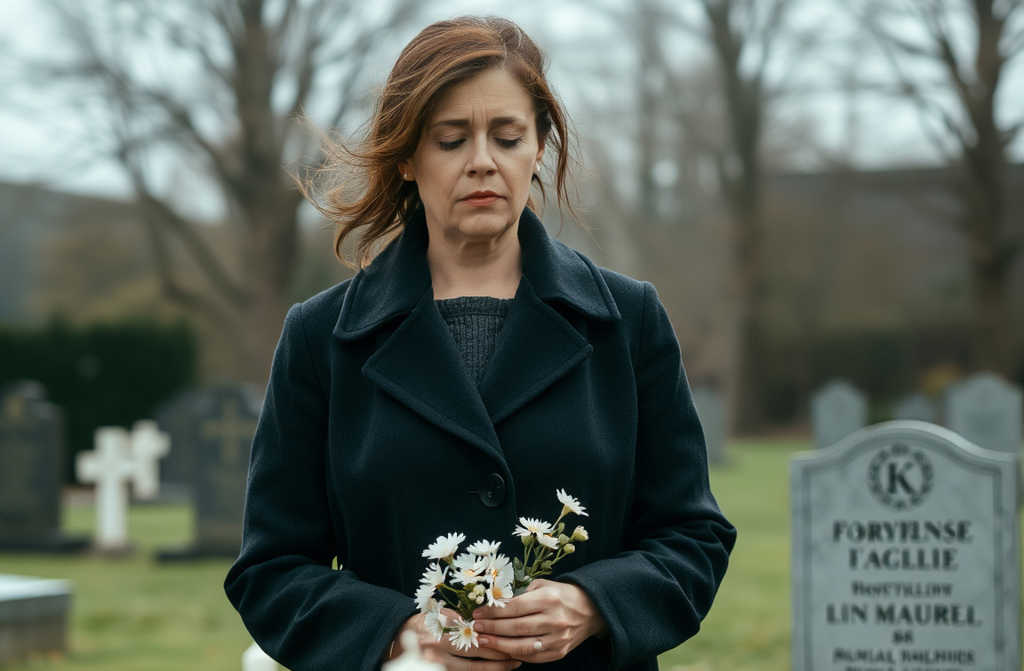
Emily had been left alone at a tender age. Her father had long since passed, and she lost her mother while she was in her final year at university. It was a harsh time: her dissertation loomed, yet grief knotted her heart. The only solace came from the family of James, the only close soul she now had.
Emily and James had studied together since their third year, and their families grew familiar. Jamess parents, Margaret and Peter Whitaker, welcomed Emily with warmth and respect, especially honoring the memory of her mother. All hoped that once their studies were over, the young couple would wed.
Their wedding was modest, and Emily mourned that her mother had not lived to see it. She recalled her mothers last words: Before you marry, you must have a proper checkup, my dear. Emily understood why. As a child she had suffered a serious injury after slipping off an icy hill, and doctors had feared lasting damage to her future womanly health. Though she was monitored, no one could give a definitive answer.
It was a bleak prospect. Before the wedding she obeyed her mothers advice and underwent another examination. While her overall health had improved, the question of whether she could bear children remained unsettled.
First she spoke to Jamess mother. After a moment of thought she said, If there is even the slightest chance, do not lose heart; I will speak with James myself. After a rowdy bachelor evening, James arrived at Emilys home, a little tipsy and uneasy. I want children, Emily, understand? What if we cannot? Would that still be a family? he asked, his voice trembling.
Emily wept, telling him the decision was his, but they could try. The doctors had left a flicker of hope, and James was the only man in her life.
The first year of marriage yielded no children. Margaret worried as much as her daughterinlaw, whom she adored. James and his father put great effort into keeping the marriage afloat and sent Emily to a specialist clinic in Manchester under the Womens Safeguard programme, which often helped fulfil such hopes. Yet the treatment brought no miracle. After two years it became clear that hope was fading. Emily despaired; James supported her as best he could, but a strain grew in the household. James did not blame Emily, yet could not accept a childless existence. Emily suggested adoption: Let us take a little one and raise her as our own. James refused. A child that is not mine will never be my son, and I cannot love him as a father. Understand, Emily, I cannot do that.
Strangely, Jamess parents sided with him, believing their son deserved his own child and that pretending otherwise would be false. They thought it cruel to raise a child unloved.
Emily eventually broached divorce, though she still loved James and did not wish to hurt him. Let us part, James. You are still young; you will find another wife and have children. James hesitated, but when he met Olga, a lively new colleague who had just joined the office, he felt destiny stirring.
The conversation with Emily was painful for him; he thought he was betraying her, leaving her to fate. Emily replied, We each have our own destiny. You deserve a better lot. I accept. Do not blame yourself. That evening James left her home, taking his belongings. Margaret and Peter came to see Emily. Dear girl, forgive us for not steering James right. Remember he once stayed over, drunk and upset? We feared hed become a drunkard, harming both you and him.
They shared tea, spoke from the heart, promising never to turn away, to help as if she were their own daughter. Yet the words offered little comfort. Emily agreed, thanked them, and wept through the night.
The separation was swift; property was not divided. Emily remained alone in the family flat they had shared, while James soon remarried. She, too, did not stay single long. A handsome, wellmannered man named Paul entered her life, surrounding her with care, but Emily could not love him. The ghost of James haunted her dreams; he appeared sorrowful, his eyes sad, his hands reaching for her yet never touching. She fought the thoughts, yearning to change her life.
One winter Emily fell seriously ill. After preparing dinner for Paul, she felt a sudden weakness; by nightfall her temperature spiked. Paul called an ambulance and kept her in his home. The next morning he was distant, caring for her in silence. When she recovered, he confessed, That night I never left your side. You called out for him, grabbed my hand, called him Jimmy, begged me not to go. Do you still love him?
Emily answered honestly, Yes. I love him. I am a onehearted woman. It is hard, Paul. I cannot build a relationship without love. She left him forever; he did not protest.
Soon after, Emily learned that James had finally welcomed a longawaited son. The news struck her like a fresh blow; the pain seemed final and irreparable. For three years she drifted in a fog, occasionally visited by Jamess parents as promised, who offered moral support. She bore no grudges toward them nor toward her former husband.
One day she saw James in the park with his son, but she did not approach; he did not notice her. Tears fell again, mourning a love that would not fade and a fate that felt unjust.
Gradually, Emily began to gather herself. The most important thing was that James seemed happy. His parents spoke of his good wife, caring, though she kept a cool distance. They adored his son, Eddie, and asked Emily not to hold any ill will. I hold no grudge, she said. He never deceived me; he loved in his own way. I insisted on the divorce myself.
On Emilys birthday, James called, simply and friendly, wishing her well. It seemed his parents had softened his heart, yet the call unsettled her again; she preferred no further contact.
A year later tragedy struck again: Olga, Jamess wife, fell ill. Margaret phoned her, saying there was little hope, weeping for her son and grandson. Emily, despite her own sorrow, could not find a place for herself but worried for them.
At the cemetery, Emily stood behind the mourners, unsure why she had come, yet unable to stay away. Jamess former motherinlaw approached, embraced her shoulders, and whispered, Thank you, dear. There is no malice nor spite in you. James never noticed her then. He called months later, brief, asking to visit. Emily, though weary, welcomed him, sensing his need.
He had changed; his youthful vigor had dimmed. They sat at a modest table, talking of life. Why dont you marry again? he asked. Emily answered simply, I love you, and I need no other. James wept.
It was strange and moving; she had never seen him cry before. Let us go to the Whitakers, I must collect Eddie, then we can walk, if you like. The boy was sweet but withdrawn, understandable for a child who lost his mother so young. Emily tried to stay neutral, not hovering, while Eddie watched her with curious eyes.
Their meetings became a regular rhythm, almost every weekend, without obligations, merely easing each others loneliness.
One afternoon Margaret called, saying James was considering asking Emily to return, though he had not decided yet. He was lonely, the year had weighed on him, and the child suffered. Emily immediately rang James, telling him she would come back. There was no one she treasured more. They lived together again, though it was hard; James remained cold and reticent, and Emily had to learn to love a child not her own.
The turning point came on Emilys next birthday, when little Eddie presented her with a drawing of the three of them under a bright sun, the word Mum scrawled above in a childs hand. Emily burst into tears, hugged the boy, and whispered, Your mother watches you from above, delighted at what a wonderful child you are. I love you too. You are my son now.
They lived peacefully thereafter. James thawed, accepted her love, and became the gentle, caring man he once was. Emily finally found the happiness she had yearned for in solitary years. Though never a devout believer, she sometimes visited the local church, lighting a candle for the soul of the woman who had left this world but had given her a beloved son and a caring husband.