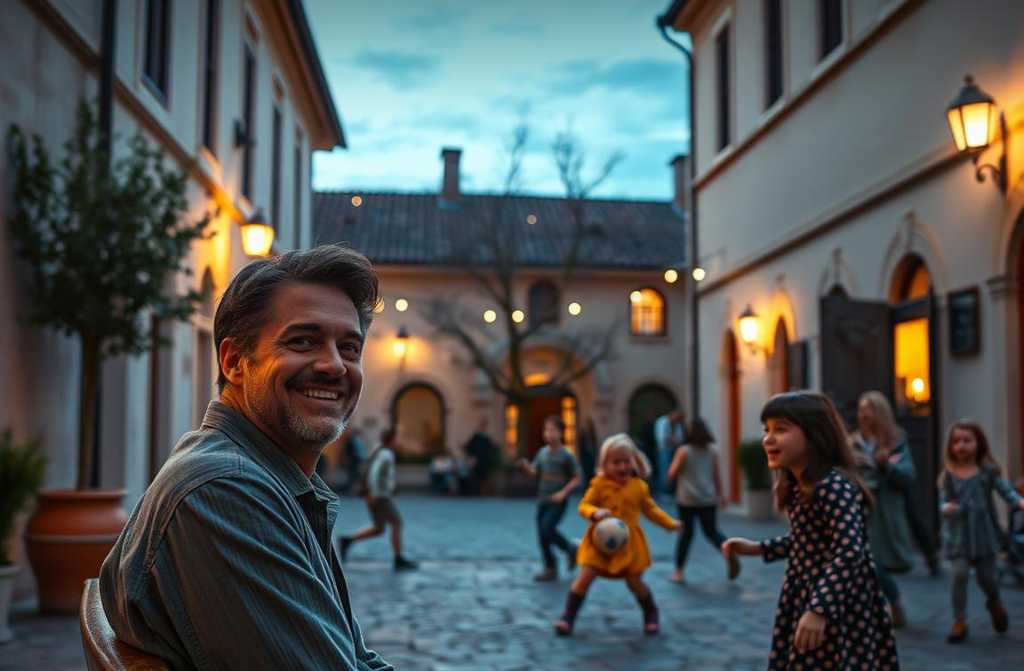
The evening feels dark and chilly even though spring has already pushed well forward. Fresh green leaves unfurl on the trees, and a faint pine scent drifts in the air. All of this seems to belong to the world beyond the blocks courtyard, which slips into twilight because there is no lighting. The patch of grass, littered with dry leaves, looks neglected. Only the occasional child or adult who is curious about the place dares to wander here after dark.
Martin, a middleaged man with a lively outlook, listens to the murmur in the neighbourhood WhatsApp group. The chaos and inconvenience caused by the blackness worry the residents more each day. Conversations about how important it is to install lights on the court so that evening sport can be safe and accessible gain momentum. Parents voice concern, younger people complain about the inconvenience, and the mix of opinions shows how complex the issue is.
Many doubt that their effort will ever pay off, but Martin, Emily, Granddad George and a handful of other volunteers decide to try. They gather in Martins flat around a big kitchen table and start planning where to begin. The first step looks like writing to the local council a daunting task, but the neighbours know its essential.
By the next morning they hold a community meeting at the playground, breathing in the fresh morning air while they hash out plans. Their first decision is to draft a petition that clearly lists every problem and every suggestion for fixing it. One by one they speak, sharing complaints and ideas, because the common goal unites everyone without exception.
After a few rounds of editing, the petition is ready. Hope begins to blossom in the neighbours hearts; even the act of preparing the document proves how strongly they can rally around a shared purpose. Now the biggest challenge is to convince the council not only that lights are needed but that they must be installed urgently.
Weeks of waiting pass. In the meantime children still dash across the grey, gloomy asphalt, while adults keep a watchful eye to prevent accidents. Finally a reply arrives: the council has approved the lighting project. New debates spark immediately as everyone discusses how to schedule court use so that each resident can train at a convenient time.
The climax arrives that evening when workmen roll onto the site and start fitting the lanterns. Neighbours gather around, watching the installation. A mix of excitement and quiet joy fills the air as the first beam flashes, flooding the court with bright white light. The space now beckons everyonefrom toddlers to pensioners. Yet the celebration is followed by talks about organising time slots to avoid clashes.
Residents argue for hours, trying to satisfy every demographic. At first it seems impossible to reach a compromise. Some push for evening sessions for children, others for their own workouts. James, who stands among the discussants, proposes a timetable system. A path toward mutual understanding opens, though finetuning the schedule will still take work.
A month after the lights are in place the court buzzes with activity; the earlier disputes fade into the background. Over the following weeks the neighbours craft a timetable that works for all. Now each night a special atmosphere settles herebright lamp light turns the court into the neighbourhoods hub. Children chase balls carefree, occasionally staging minitournaments with parents; adults jog or play tennis in the evenings.
Jamess timeallocation plan becomes a real breakthrough: everyone knows exactly when they can use the court. It isnt always smoothoccasional overlaps force quick adjustmentsbut any friction disappears fast because the community agrees that agreement and respect matter most.
Some residents were sceptical at first, fearing the suddenly popular court might sow discord. Yet openness to compromise and a willingness to listen settle the issue swiftly. Giving each person a sense of importance in the joint effort proves vital.
The light on the court, both literal and figurative, becomes the centre of courtyard life. People meet more often, not only in the mornings but also at night, sharing news over a cup of tea in their flats. Childrens laughter and the hum of friendly chatter become the familiar soundtrack of quiet spring evenings.
Now that the courtyard feels comfortable, residents enjoy simple pleasures: strolling out for a walk, sitting on a bench under the soft evening glow, breathing air scented with blossoming flowers. These modest joys bring together people who once hardly crossed paths; they now talk as if they were old friends, all thanks to a shared project.
It seems everyone has left the dark, unlit days and the hassle of organising behind. Yet the community remembers the key lesson: learning to negotiate, taking initiative and supporting one another is essential. That reminder tells them they could one day change the world around them, reshaping their surroundings through collective effort. Change, as their experience shows, becomes possible when people unite for a common goal.
One spring evening, Martin sits on a bench watching children revel in their games while adults chat easily, likely planning future projects. He realises that in this very courtyard the neighbourhood has found its balance, its point of strength.
Over time the court becomes a true symbol of transformation. It stands not only as a sports area but as a link that has grown stronger thanks to both the physical glow of the lamps and the inner light the residents have sparked. Confidence burns in their hearts: they can make their little corner friendlier and safer, bringing pride and joy.
The result is clear: a court that once lay dead in the night now shines brightly, turning into a haven of hope and opportunity, a sturdy emblem of community and friendship. The story reshapes not just the place but the people themselves in this new world they have built together, they look to the future with optimism and belief in tomorrow.