George Whitaker opens a plywood suitcase in the cramped living room just as October begins, when the maples outside still cling to yellow leaves and the first rustle of fallen foliage presses against the pavement. The sofa, the round coffee table, the narrow bookcase there is no room for any more furniture. He spreads planes, chisels, and marking gauges across the tabletop as if taking rollcall of old comrades. The polished metal glints softly, the wooden handles exude the faint scent of linseed oil he applied the night before. The man and his tools converse silently, their dialogue rich with long pauses for memory.
The joinery workshop where he spent fortythree years has shut its doors; the owner now rents the space for a warehouse of uPVC windows. From Friday to Monday he must clear everything down to the last nail. George saves his thirtyyear collection of tools, bought at markets and from former masters. In his tworoom flat there is barely a spare inch, yet he tucks the suitcase under the bed and decides to let it rest for now, hoping the future will reveal a purpose. A year later, in autumn, the thought of the untouched planes begins to itch. It keeps him awake until he settles on a simple plan: show the neighbours what a piece of wood can become in a skilled hand.
He carves a sign from a block of beech, burning the words Tools and People into it. That evening he rings the bells of three flats on his block and shyly invites the residents to a home museum. The pensioner opposite smiles, adjusts her spectacles and promises to visit with her grandson. A teenager on the fifth floor finds the idea odd: Is this like a museum, but without tickets? George replies, And without boring lectures. He realises he must truly keep it lively, or the children will never come.
The night before the exhibition he rises early, brews a mug of tea, and runs a hand over the suitcase. His fingers find a slight fray in the fabric at the cornersyears have taken their toll. He arranges the pieces: a handcarved smoothing plane on the windowsill, three types of carving gouges on the chest of drawers, an old workbench beside the wall that he built in his youth. For each object he recalls where he bought it and who used it before him, speaking the stories aloud and noticing he is retelling lives, not just facts. An instrument lives as long as it is remembered.
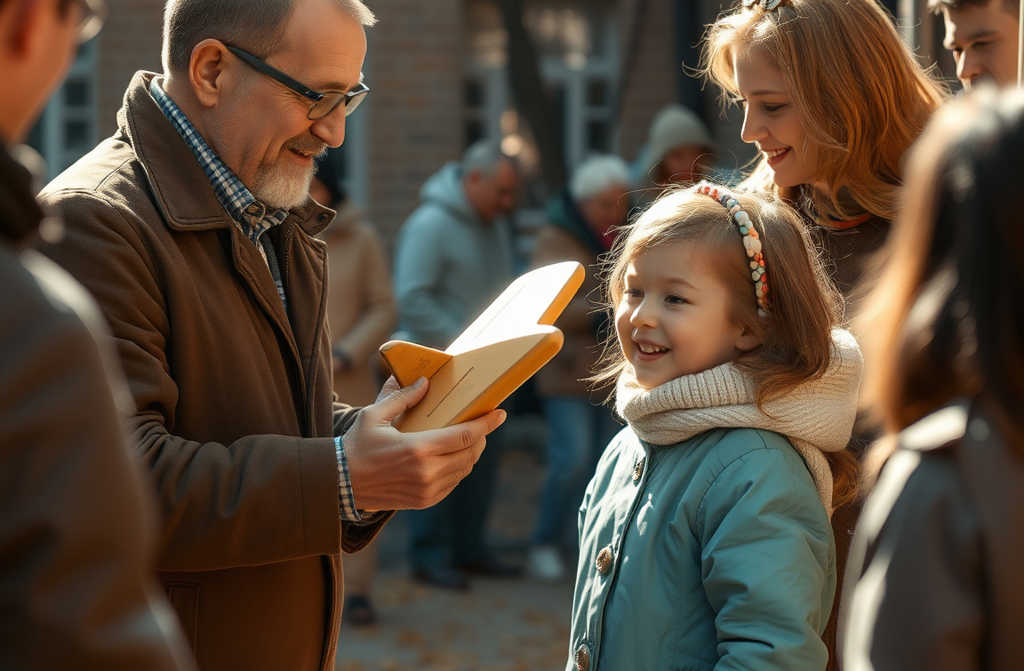
On Saturday the door bursts open. First arrive Emily from the fifth floor and her brother Thomas. The girl runs her finger along the edge of the smoothing plane and marvels at how it reflects like a mirror. George shows her how a properly set blade leaves a board as smooth as glass. Soon more neighbours gather: the accountant from the third floor, an architecture student, two lads with scooters. He finds a short anecdote for each. The room feels tight, yet the air stays light; the windows are cracked open, letting the warm smell of oil and shavings drift in. People listen as if recalling a forgotten respect for handmade work.
By evening the informal exhibit ends, but a line of questions gathers at the door. Can we come back, maybe bring the kids? Will you hold a workshop? My old stool wobbles; can you show me how to fix it? The queries warm him more than any heater. George promises himself and the crowd that he will return to the bench, even without a proper workshop.
On Monday he inspects a semibasement in the house opposite, hoping to use it for a oneoff class. The bulbs flicker dimly, the concrete smells of dust, but the space would suffice. The landlord, however, refuses a singleday use and hands him a notice: From 1October the rent rises threefold. The paper rustles dryly, like late leaves under a boot. The clause cites a months notice, making the increase legally sound, leaving George with little room to argue.
That evening, seated at his kitchen table, he watches the street lamps flicker as the wind drives the last golden linden leaves away from the entrance. In his mind the empty bench reappears, surrounded by people who have only just begun to need him. A heavy feeling settles: if he hesitates, the exhibition will remain a lone flash, and everything else will slip back under the bed.
He wakes unsettled. Stepping into the courtyard, he tucks a folded notice about the rent increase into his pocket. The caretaker sweeps wet leaves; schoolchildren haul backpacks over one shoulder. On a bench sits Emily, waiting for her mother, a small wooden board clutched in her hands: a perfectly planed surface with a neatly cut letter E. She beams, showing the splinters on her fingertips, proud of the work she did at home with her grandfathers saw. In that instant George sees a line from his old smoothing plane to this fresh letter. He pauses, breaths the cool air, and notices the open space between the houses: a smooth pavement, a long bench, a table for dominoes. No heatblowers are needed yet; winter still feels distant.
He prints ten flyers: Tuesday, fivep.m., in the courtyard, lesson on wooden joints. Ages seven to seventy. He sticks them to the council noticeboard with bright blue tape.
On Tuesday he drags a folding workbench with clamps from the loft, binds it with transport strap, and carries it out to the courtyard. He spreads a canvas sheet near the bench, lays out two planes, a saw, a box of chisels, a pack of sandpaper, and hangs a homemade sign on a nearby branch: Lesson today at five. Passersby stop, smile in surprise, and ask if it will be noisy. He answers, Only the tap of the mallet, the scent of shavings, and stories. A little clatter is healthy. He tucks the rent notice back home, pressing it under a book as if erasing it from the day.
The first outdoor session begins under a grey sky. Light fades early, but they have an hour before darkness. Four children, two adults, and a curious caretaker who never puts down his broom gather. George demonstrates how to read the grain to judge wood dryness, how to test a board with a quarterinch chisel, and why patience matters in a dovetail joint. He lets the kids try, adjusts their grip, jokes, and recounts tales of old masters who built stages, staircases, and window frames. The wind carries dry leaves across the pavement while shavings fall in neat spirals beside them.
When the street lamps flicker on, he packs the tools back into the suitcase and looks at the youngsters, cheeks flushed from cold and excitement. Emily asks if he will return tomorrow. Ill be here, he says, unless anyone objects. The adults exchange glances and offer a thermos of tea to keep the children warm. Someone mentions posting in the neighbourhood chat to invite more people. In that moment George realises he will not slip back into solitude.
Behind him the caretaker taps his broom against the pavement, scattering stuck leaves. Master, he calls, could you sharpen the handle of my spade tomorrow? George nods, Tomorrow Ill show you. The decision to hold the class outdoors, made only hours earlier, now breathes its own life. As he lifts the bench onto his shoulder, it becomes clear: even without a wall, skill cannot be locked away.
Dusk settles quickly, house shadows stretch, the air chills. He walks back to his flat, tools in both hands, feeling a pleasant weight. The stairwell lamp flickers on as he passes. He glances back at the courtyard, where leaves whirl and the faint scent of fresh shavings lingers in the cool air. There is no turning back.
A few days later he runs his third openair class. The weather is brisk, a hint of winter in the breeze, yet children and adults keep coming. A thin layer of snow on the bench melts under busy fingers. Participants wrap their creations stools and little boxes in warm scarves, and the heat doubles.
Inspired by the local enthusiasm, the residents post in their online group, asking the district council to support the popup workshops. Officials respond kindly, promising to investigate funding possibilities.
One morning, while George sets the bench back in its original spot, two council representatives arrive. They work for the districts cultural services and have come to learn more about his project. Moved by the lively atmosphere, they cannot stay indifferent.
Could we arrange a meeting? one asks, eyeing the modest crowd gathered to carve wood. Were looking at winter talks about providing a permanent space for your workshop.
George nods, inviting them in for a cup of tea later. Their conversation fills him with hope. They discuss possible venues and grants that could sustain such a communityfocused initiative.
When the informal sessions evolve into tighter gatherings in kitchen rooms, news arrives in late December: the council will allocate a historic building for the renovation of a workshop. The empty premises have lain idle, and George feels ready to breathe new life into them. Visiting the site strengthens his belief that he can once again work under a roof.
He shares the good news with his pupils, telling them a proper space will soon be ready for regular classes. For the children it becomes a generous promise of future discoveries.
At the turn of the new year George steps into the warm, lightfilled building, a bundle of tools in hand. The walls seem to beckon, ready to be scented with fresh shavings and oil.
He knows those walls will witness countless stories of labour and creativity not only his. The future spreads before him like a smooth board, a blank slab awaiting the firm hand of a plane.