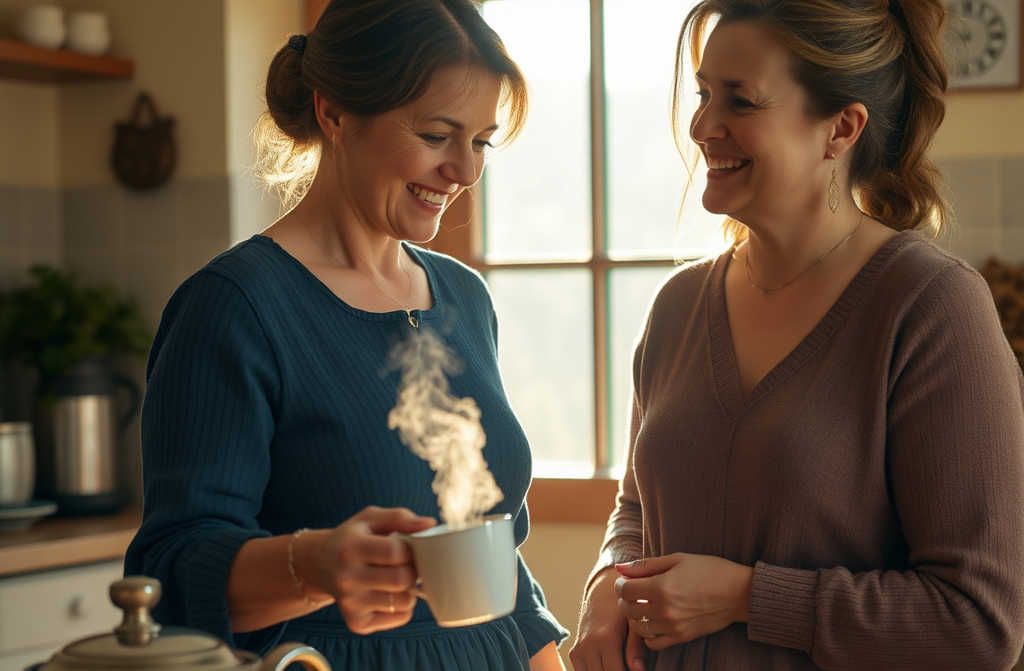
The Perfect Balance
Margaret Whitcombe had always prided herself on being a practical woman. She spent her whole career as an accountant, keeping tabs not only on the numbers but on every one of her own actions. Nothing superfluous, nothing reckless. Even the divorce from her husband twenty years earlier passed without dramashe simply filed the papers once she realised he would never give up his evenings at the pub.
The only thing that could unsettle her was her son, Max.
He was her complete opposite. As a child he was a daydreamer, filling school notebooks with sketches of pirate ships. In his teens he became a romantic, scribbling verses at three oclock in the morning. Now, at thirtyfive, he still seemed unable to settle, as if caught in an endless quest Margaret called running from responsibility. He bounced from job to job, staying only a month or a month and a half before moving on.
Mother, you dont get it, he would say, waving his arms. I cant spend thirty years stuck in a single office like you did!
Im not stuck, she replied coldly. Ive built a career.
Max would merely roll his eyes.
Every conversation turned into a debate. She was stubborn, methodical, and had a clear plan. He was airyfaced, impulsive, and lived for the moment.
You still live at home because you cant afford your own flat! she chided.
But I get to travel! he retorted.
On what money?
On whatever I can earn and the allowance you give me, he grinned, and Margarets irritation deepened.
She tried to fix him: coaxing him into respectable jobs, taking him to therapists, even threatening to withhold his inheritance. Yet Max remained Maxcarefree, impractical, and hopelessly beloved.
Because, despite everything, whenever he burst into her kitchen with bright eyes and new ideas, she caught herself thinking, Lord, hes so much like me at his age That age she had buried beneath a mountain of debts and duties, and it infuriated her more than anything.
That afternoon Max stormed into the flat, flinging the front door open so hard the breeze scattered the bills that lay on the side table. Margaret flinched, nearly dropping the teacup she was about to sip.
Mum! he gasped, stopping in the centre of the room, panting as if he had run the length of London. His eyes shone, reflecting not the sunlight through the window but something brighter and more elusive.
Margaret set the cup down slowly, squinting. She recognized that lookit had first appeared when Max was sixteen and had raced in, announcing his acceptance to art college.
Ive met her, he said, his voice solemn as if taking an oath.
Her? Margaret asked, already guessing from his restless stance.
The one, Max ran his hand through his hair, leaving it messier than usual. A smile tugged at his lips, one he tried and failed to hide.
Margaret crossed her arms. Shed heard this script three times in the past two years.
Another artist? she asked, keeping her tone even. Or, heaven forbid, a poet? The last time your creative muses wore me out.
Max laugheda clear, genuine laugh that reminded her of the evenings she used to tickle him before bedtime.
No! he exclaimed, stepping forward. Shes a doctor. A therapist. She works at the local health centre.
He delivered the news with such pride it seemed hed just won a Nobel Prize. Margaret lowered her glasses, wiping them with the edge of her apron.
What makes her special? she prompted, already sensing that this time he meant business.
Everything, Max whispered, a reverence in the single word that raised Margarets eyebrows.
He couldnt explain with the vocabulary she expectedno talk of qualifications, salary, or career prospects. He simply stood there, his face lit from within.
It was yesterday, he began, when I went to the clinic for a swimmingpool certificate, she looked up at me He fell silent, his lower lip quivering.
And I realised. Shes the one.
He went on:
Mum, we met at a café on the corner today!
Margaret placed the cup on the table.
So, how did your date go?
She, Max halted, searching for words. She turned out to be perfectly ordinary and yet extraordinary.
Extraordinary? Margaret raised an eyebrow. Whats extraordinary about her?
Max thought a beat, then his face brightened.
You see, Mum, with her it feels like being with an old friend. No tension, no games. We just chatted about nonsensehow she cant stand mandarins with seeds and how I cant stand pulp in my orange juice.
He chuckled, recalling:
At one point I caught myself talking for half an hour about the familys old cottage and my childhood fear of frogs in the pond. She didnt yawn, didnt stare at her phoneshe really listened.
Margaret smiled despite herself.
Thats rare these days.
The strangest thing, Max lowered his voice, was that I didnt have to perform. I was simply myself, and that was enough.
He paced the kitchen, gesturing wildly.
And then we left the café, and you wont believe itshe suggested a walk despite the darkening sky and a drizzle. She said, I love the smell of wet pavement.
Margaret glanced at his sodden trainers by the door.
So thats why your shoes are wet? Thought youd slipped into a puddle again.
We walked for two hours! Max gestured expansively. Talking, laughing
He fell silent, watching the rain streak down the window.
And you know what surprised me most? When I saw her to her flat, she simply said, Thanks for a lovely evening and leftno games, no vague maybe someday.
Margaret poured hot tea into his cup.
Well, it looks like youve finally found a woman worth your time. Just rememberif you catch a cold walking in that rain, Ill be the one treating you, not her. Understand?
Max grinned, reaching for a biscuit, but Margaret slapped his hand.
First change into dry clothes and wash your hands!
He pouted briefly, then obediently headed for the bathroom. A minute later he returned in a dry sweater, drying his hands on a towel.
Mum, can I invite her over on Sunday? he asked, hopeful.
Margaret feigned a frown. If youre that decisive just give her a headsup that Im not planning a formal tea party. Let her come as if she were coming to our home.
Thank you! Max nearly bounced with joy. She mentioned she loves simple homecooked meals.
Looks like youve already discussed the menu, Margaret quipped. Fine, Ill bake your favourite apple crumble.
Youre the best! he exclaimed, hugging her.
He reached for another biscuit, and this time Margaret let him. She watched her son chew contentedly and realized she hadnt seen him so genuinely at peace in ages.
By the way, she asked suddenly, whats her name, your therapist?
Max froze midway to his mouth, eyes widening. Mum, you wont believe it her name is Anne. Just like you. She prefers to be called Annie.
Margaret stared, cup in hand, eyebrows climbing.
Anne? she repeated slowly. Well, I suppose fate has a sense of humour.
She set the cup in the sink and turned to him.
So when is she coming? Sunday afternoon?
Yes, if thats alright, Max said, wobbling on his chair. Mum, you wont grill her about career prospects or bank accounts like last time, will you?
Margaret twitched a smile. Alright, if shes managed to tolerate your damp socks and frog stories, Ill try to be polite.
She fetched a notebook of recipes. Just warn her I havent cooked for guests in five years. If the crumble fails, youll take the blame.
Max grinned. Dont worry. She likes things imperfect. She says thats what makes people alive.
Sunday morning.
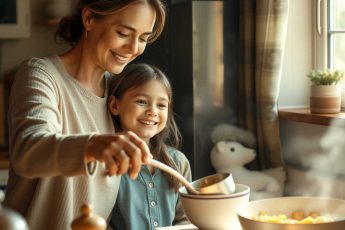
By twelve, the kitchen held a perfect apple crumblegolden crust, a whisper of cinnamon, apple slices laid in tidy rows. Margaret, wearing a crisp apron and her hair neatly pulled back, set the table in the sitting room.
Dont relax, Max, she said, arranging plates.
No relax. If youre going to do it, do it properly.
Half past one, the doorbell rang.
Anne stood in the doorway in a simple yet elegant dress, holding a modest bouquet of daffodils and a bottle of fine red wine.
Good afternoon, Mrs. Whitcombe. Thank you for having me.
Please, come in, Margaret replied, noting Annes immaculate manicure, the lack of overpowering perfume, and the way she slipped off her shoes at the hall.
The conversation around the table was light and comfortable. Anne didnt pry, didnt flatter, but she wasnt a wallflower either. When Margaret served the crumble, Anne cut a slice with a fork and tasted it.
Marvelous, she said sincerely. The balance of tart and sweet is spot on.
Thank you, Margaret softened a fraction. Its an old family recipe.
You can taste the love in it, Anne smiled. It clearly comes from the heart.
Max beamed like a lightbulb, careful not to intrude.
After tea, Anne rose unexpectedly and began clearing the dishes.
No, no, let us! Margaret stepped forward.
Please, Id like to help bring them to the kitchen, Anne said gently but firmly.
Margaret raised an eyebrow, but did not argue.
When Anne finally left, Margaret wiped the already spotless table and murmured, Very clever.
Max froze, cup in hand.
Is that a compliment?
Its a statement of fact, Margaret replied, placing a napkin back in its spot. Invite her again sometime.
She turned toward the window and let a small smile slip onto her face.
Finally, its happened, she thought, feeling an unexpected warmth in her chest.
Not an artist with pretensions, not a whimsical poet, but a doctorsteady hands, calm gaze. Someone who didnt put on a performance but simply helped with the dishes as if shed done it a hundred times before.
The pie was judged fairly, Margaret reflected, satisfied.
She glanced at her son, who was still holding the cup Anne had used, his eyes now lit with a quiet, deep happiness rather than his usual restless spark.
Lucky you, my boy, she whispered inwardly. At last, youre lucky.
And in that moment she realised that his luck was hers as well. She no longer saw the perpetual boy searching for himself; she saw a grown man, genuinely content.
The lesson settled over the kitchen like the lingering scent of baked apples: true balance isnt found by chasing endless possibilities or clinging to rigid plans, but by embracing the simple moments where love, honesty, and a wellmade crumble bring everyone together.