12October2025
The suitcase stood by the front door, zipped up as if it were the final brushstroke on a painting about to be hung. I tugged at my belt, stealing quick glances at my sister, Claire, and at my nephew, Jack, who was ten. The hallway smelled of damp; outside a steady drizzle fell, and the groundskeeper was gathering the heavy autumn leaves along the pavement. I didnt want to leave, but trying to explain that to a tenyearold would have been pointless. Jack stared at the floor, his lips pressed together in stubborn silence.
Claire tried to keep her voice bright. Everything will be alright, she said, forcing a smile. Mum will be back soon, and well manage for now.
I wrapped my arms around Jack, hugging him tightly and almost hurriedly, as if a longer embrace might make me change my mind. Then I gave Claire a quick nodshe understood without words. The door clicked shut behind us, and the flat fell into a hollow echo. Jack was still leaning against the wall, clutching his old school backpack. I felt a sudden awkwardness settle over the room: my nephews belongings on the sofa, his boots next to my own wellworn leather shoes. We had never lived together for more than a couple of days.
Come into the kitchen, I said. The kettles on.
He followed me without a word. The kitchen was warm, the table set with mugs and a loaf of fresh bread. I poured tea for both of us, trying to fill the silence with harmless chattertalk of the weather, the fact that wed need to buy new rubber wellies soon. Jack answered in short sentences, his eyes drifting either to the rainspattered window or somewhere deeper within himself.
In the evening we sorted his things together. Jack neatly placed his tshirts into the drawer of the chest of drawers and stacked his exercise books beside his textbooks. I noticed he deliberately avoided the old toys that had once belonged to me, as if he were afraid of upsetting the balance of someone elses home. I decided not to press him for conversation.
The first few days were held together by sheer will. Morning routines for school were quiet affairs: I reminded him of breakfast, checked his bag. He ate slowly, hardly looking up. In the evenings he did his homework by the window or read a book from the school library. We rarely turned the television onthe background noise irritated us both.
I realised how hard it was for a boy to adapt to a new schedule and an unfamiliar flat. I caught myself thinking that everything felt temporary even the mugs on the table seemed to be waiting for someone else to return. Yet we could not afford to linger: in two days we had to go to the council to formalise the temporary guardianship.
The council office on the high street reeked of paper and damp coats. A line of people stretched past the bulletin board plastered with flyers about benefit schemes and local grants. I clutched a folder under my arm: Claires written consent, my own agreement, copies of passports and Jacks birth certificate. A clerk behind the glass spoke in a clipped tone.
Youll also need a proof of residence for the child and the other parents consent, she said.
The other parent has been missing for years. Ive brought a copy of the birth certificate.
It still needs an official document.
She flipped through the papers slowly, each comment feeling like a rebuke. I sensed a hidden distrust behind the formality. I explained the situation again and again, outlining Claires shift work, showing the routesheet wed drawn up. Finally, they accepted the application, warning that a decision would not come any sooner than a week.
Back home I tried not to show my exhaustion. I took Jack to school myself, hoping to speak with his form tutor about his circumstances. In the bustling hallway children shoved past the lockers. The teacher met us with a guarded expression.
So youre now responsible for him? Can you produce the paperwork?
I handed over the documents. She examined them for a moment.
Ill have to inform the headteacher And from now on, all queries should be directed to you.
Yes. His mother works on a rotation schedule. Ive arranged a temporary guardianship.
She gave a brief nod, without overt sympathy.
The main thing is he doesnt miss lessons.
Jack listened to the conversation with a tense face, then slipped into his class without a goodbye. I noticed he was becoming more withdrawn at home, often lingering by the window in the evenings. I tried to start conversationsasking about friends, about schoolworkbut his answers were short, tinged with fatigue.
A few days later the childrens services called.
Well be coming to inspect the living conditions.
I cleared the flat until it gleamed. That night Jack and I dusted together, arranging his books.
Itll all be the same after this, right? he muttered.
It doesnt have to be, I replied. You can set it up however you like.
He shrugged, but moved his books himself.
On the appointed day a social worker arrived. Her phone rang in the hallway; she answered briskly.
Yes, yes, Ill check now
I escorted her through each room, answering questions about daily routines, school, meals. She then turned to Jack.
Do you like it here?
He shrugged, his gaze stubborn.
He misses his mum but we try to keep a schedule. All lessons are done on time, and we go for a walk after school.
She huffed.
No complaints?
No, I answered firmly. If you have any questions, you can call me directly.
That evening Jack asked, What if Mum cant come back?
I paused, then sat beside him. Well manage, Jack. I promise.
He stayed silent a moment longer, then gave a barely perceptible nod. Later he offered to slice the bread for dinner.
The next day a scuffle broke out at school. The form tutor called me in after lessons.
Your nephew got into a fight with a boy from another year group. Were not sure you can keep the situation under control.
Her tone was cold, laced with doubt about a woman who held only temporary rights. I felt a surge of anger.
If there are concerns about Jacks behaviour, discuss them with me directly. Im his legal guardian; you have seen the paperwork. If a psychologist or extra support is needed, Im ready to engage fully. Please, dont rush to conclusions about our family.
She looked surprised, then gave a short nod.
Alright Well see how he settles.
Walking home with Jack, the wind tugged at my coats hood. I was tired, but there was no turning back now.
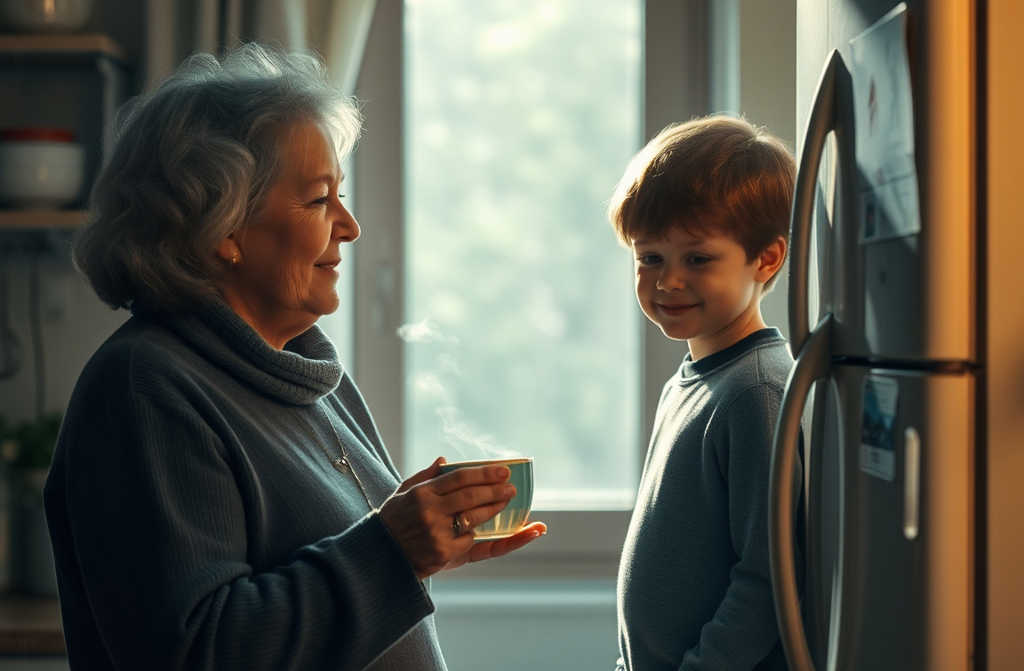
When we got back, I set the kettle on and took a loaf from the pantry. Jack, without waiting for a cue, sliced the bread into even pieces and laid them on plates. The kitchen filled with a quiet warmthnot from the light, but from the feeling that no one here would judge us or demand explanations. I watched him glance at me, his eyes lingering a little longer than before. I asked, How do you like the tea with a slice of lemon?
He shrugged, but didnt look away. He seemed ready to say something, but held back. After dinner I didnt push him to start on his homework; we washed the dishes together, and in that simple task a sense of shared purpose emerged. The tension that had hung between us since his arrival began to dissolve, strand by strand.
Later, in the living room, Jack came with his maths notebook. He showed me a problem he couldnt solve and, for the first time in days, asked for help. I sketched the solution on a scrap of paper, and when the answer clicked for him, a quiet smile appeared. It was the first genuine smile Id seen in a long while.
The following morning the routine took on brighter colours. On the way to school Jack actually spoke to mehe asked if, after lessons, we could pop into the corner shop for a pack of coloured pencils. I agreed immediately, noting how important that small step was: he was beginning to trust me in the mundane. I walked him to the gate, wished him luck, and watched him turn back before stepping through the doorway. That brief pivot felt like a signal that he was no longer a complete stranger in this town and this house.
We went into the shop, chose a set of pencils and a simple sketchbook. Back home Jack spent a long time at the kitchen table drawing, then proudly presented me with a picture of a tidy house with bright windows. I tacked the drawing onto the fridge, gave his shoulder a gentle pat, and he stayed close. In that moment I felt calmer: if he could picture a home, perhaps he was allowing himself to settle here.
Our daily rituals settled quickly. Evenings we cooked togethersometimes shepherds pie, other times mash and beans. Over dinner we talked about school: who said what in class, what grades were coming in. Jack no longer hid his notebooks; he asked for advice on a test or recounted a funny incident from his classmates. Claire called now and then; the conversations were brief, but Jack answered calmly, his voice steady. I could hear confidence in him: he knew his mother would return, and for now he had someone he could lean on.
One afternoon a socialservices officer returned, having arranged the visit in advance so wed be home. She inspected the rooms, asked Jack about his daily routine and school, and he responded without fear, even with a hint of pride about his responsibilities. She noted the orderliness of the flat and said, If we have any questions, well call. For now everything looks good.
After that visit I felt a weight lift. No one could now accuse me of neglect or indifference. I realised that our life had been accepted by the outside, meaning I could finally stop bracing for hidden traps behind every knock or phone ring.
One gray morning Jack was the first to the kitchen, turning the kettle on before I even arrived. Outside the clouds were still heavy, but a shaft of sunlight broke through, making the wet pavement glisten. He sat down at the table and asked, Did you always work as an accountant?
I was taken abackhe had never shown interest in my career before. I told him about my job in the finance department of a midsize firm, about the office and the colleagues. He listened intently, peppering me with questions, laughing at a few anecdotes from my youth. Over breakfast we chatted about everythingfrom football in the local park to the promise of warmer days ahead.
We left for school without rush; we checked his bag together, Jack tied his laces and slipped on his coat without a reminder. At the door he said, See you later! Ill be straight home after school.
There was something more in that promise: he had claimed the flat as his own little island of safety.
Later that evening Claire called from the mine site where she worked. For the first time in days the conversation stretched long. Jack told her about school and his new friends; his voice was steady and confident. When the call ended, she asked me to stay on the line.
Thank you, she said, relief evident. I was so worried about Jack. I feel calmer now.
I replied simply, Were all right. Were managing.
When I hung up, pride swelled inside mefor both me and my nephew. We had endured these weeks together, building trust where at first there had been only awkwardness and anxiety.
In the days that followed the house fell into a comfortable rhythm: evenings we shared tea with slices of bakery bread, talked about weekend plans. On the windowsill a small pot of water held a sprig of spring onion that Jack had planted as an experiment. It was a modest gesture, but to me it signified growthnew habits and tiny joys taking root.
One night Jack asked, If Mum goes off to work far away again could you still look after me?
I met his gaze without a flicker of doubt. Of course. Weve already proved we can do it together.
He nodded seriously and never brought the subject up again, but from then on he turned to me more freely for advice, for permission to invite a friend over, or simply to share a secret from school.
The spring air outside grew fresher each day; puddles dried faster than a week before, and the yards opened up for childrens games and the occasional stray football.
One morning we went through our usual routine: breakfast at the kitchen table with the view of a wet courtyard, the kettle humming softly beside us. Jack hurriedly packed his notebooks into his backpack while I checked his timetable in his diary, no longer feeling the familiar knot of worry over endless paperwork or sudden calls from the school.
I thought then how life had once again taken on a clear shapea reliable schedule, simple yet vital for a child in the midst of change. I knew now that we could succeed not merely for the sake of ticking a box on a form or gaining approval from a council officer, but for the quiet, mutual trust that builds itself step by step between adult and child.